
Music, Non-Stop
Ralph Larmann
In the music industry, passion and enthusiasm can take artists a long way. Combine that with genuine talent and their potential is limitless. Incredibly, Ralph Larmann embodies all those traits in both musicianship and picture taking, and although he never played the stadium stages he now shoots, his devotion and enthusiasm for the subject have made him one of the biggest names in music photography.
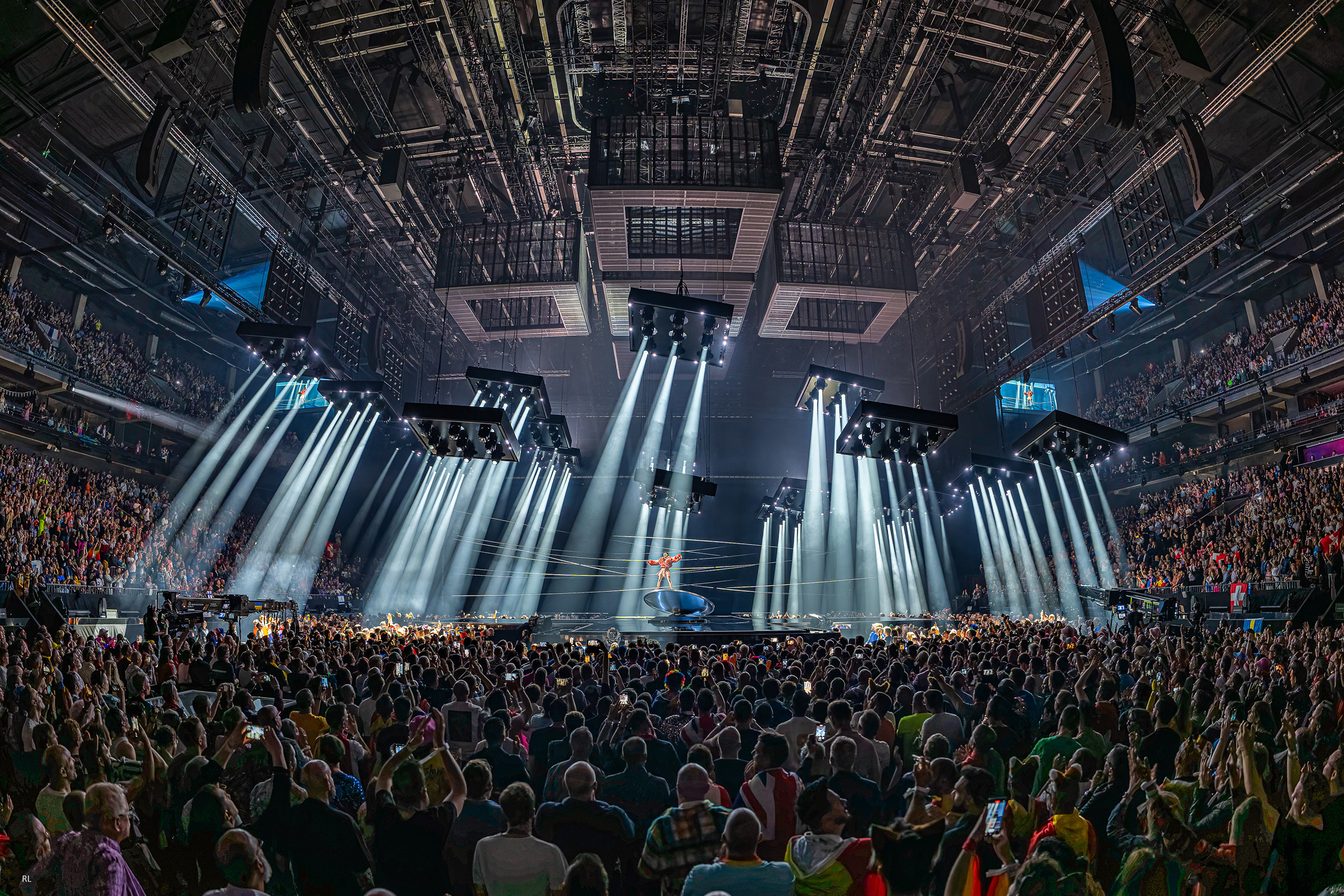
 © Ralph Larmann | Sony α1 + FE 14mm f/1.8 GM | 1/100s @ f/1.8, ISO 100
Having spent his career photographing some of the world’s biggest bands as well as publishing photo books on touring and stage design, Ralph puts his success down to a genuine love of music. “It’s my first love,” he reports, “and I’ve been drumming since I was nine. I studied drums at music school from age 13, managed and played in bands, produced music and still teach drumming once a week. Music is always around me, and I never want to give up those roots.”
 © Ralph Larmann | Sony α1 + 15mm f/1.4 Fisheye | 1/125s @ f/1.8, ISO 500
At 19, writing for music magazines, he took a pivotal decision – to photograph the bands he met himself. “That’s how I started with photography,” he admits, “with my devotion to music fuelling every picture. I wrote a series about touring, covering the gear of bands like Kiss, The Rolling Stones and Oasis, their instruments and amplifiers… then I shot the usual three or four songs at the start of a set. That’s where I really started to form my style.”
Ralph’s work centres on the energy and emotion of a live performance. “The perfect picture needs to have all the vitality of being in the room,” he explains. “It comes from the pose of the performer, the lighting, how they’re framed by the stage, and for me, I love to see the crowd. It’s live music, so the viewer should feel they're with everyone else, the bass thumping in their chest.”
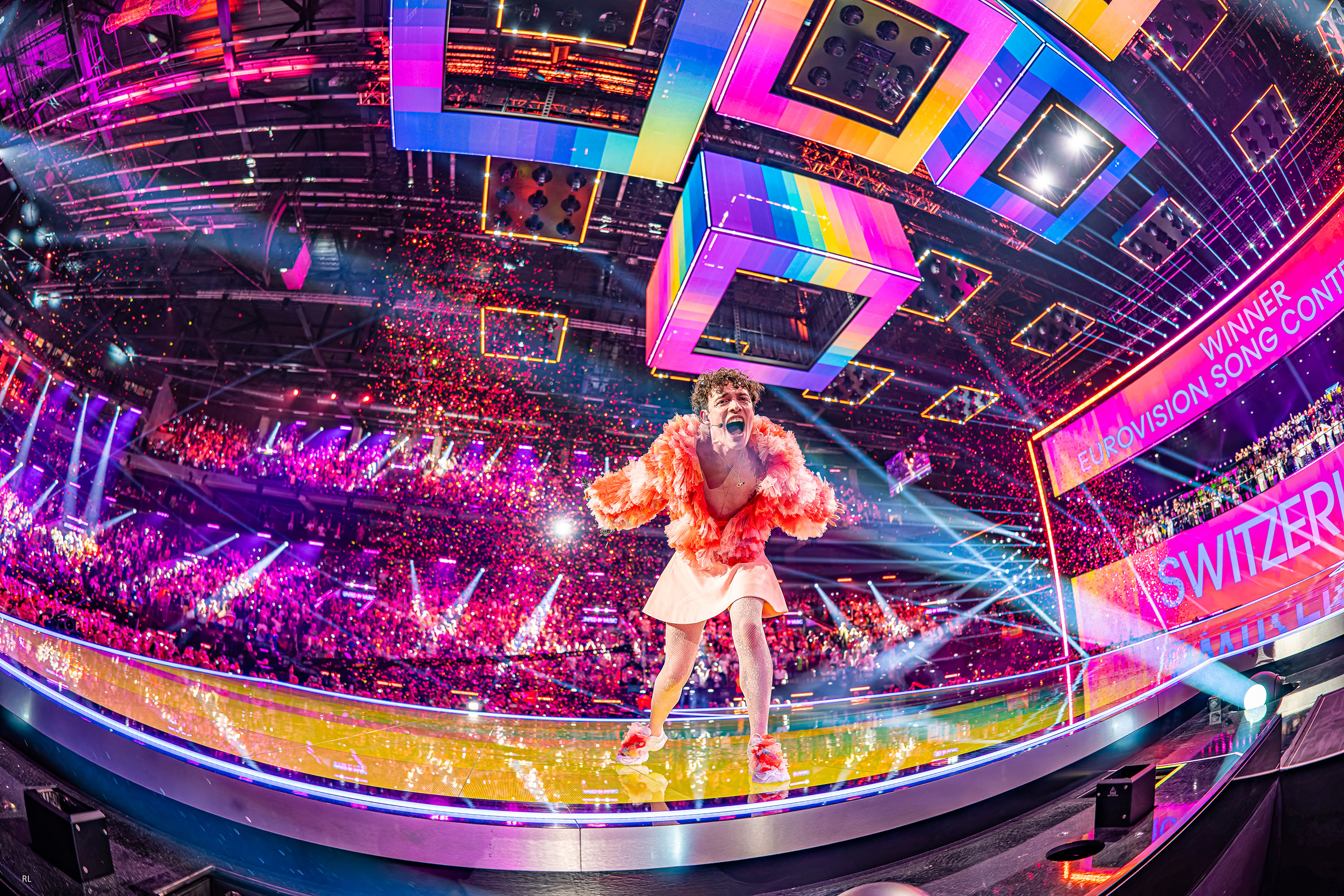 © Ralph Larmann | Sony α1 + 15mm f/1.4 Fisheye | 1/160s @ f/1.6, ISO 640
Ralph’s work at the recent Eurovision Song Contest shows it perfectly. “I’ve photographed Eurovision 18 times now,” he smiles, “and the grand final has the most awesome energy. For me, it’s the Olympics of music and I love it. The people, the fun, 40 nations celebrating music… It's wonderful!”
“You have to connect the crowd to what’s happening on stage,” he explains, “because they and the setting are part of the show. Performers know that, so photographers should, too.” Often framing wide, to include the rapt faces of fans and brilliant set designs, lighting and pyrotechnics along with the performers, Ralph relies on up to eight Sony Alpha 1 cameras at the biggest events.
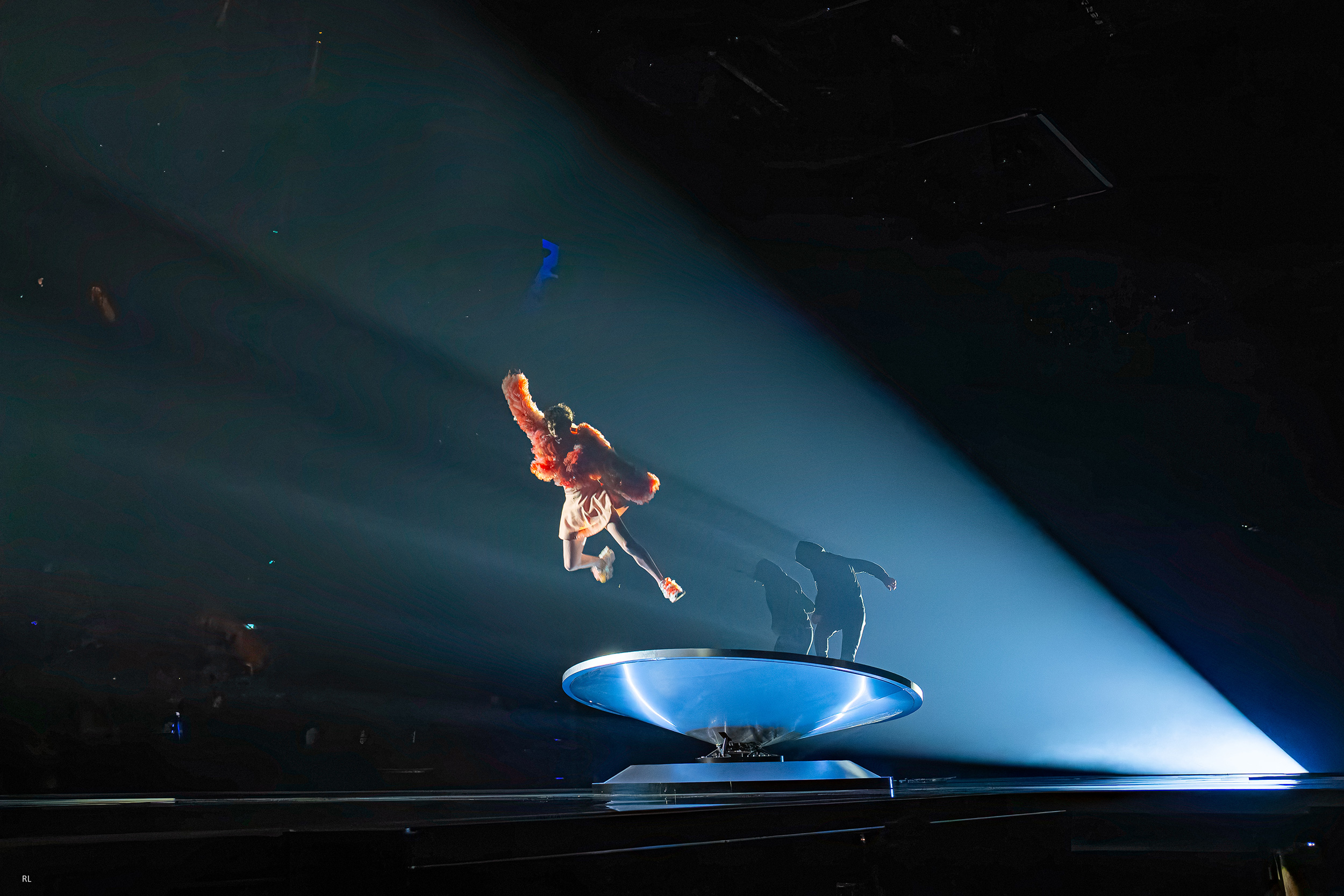 © Ralph Larmann | Sony α1 + FE 24-70mm f/2.8 GM II | 1/250s @ f/2.8, ISO 3200
“There are so many ways these cameras help me, it’s crazy,” he says. “At Eurovision I had four Alpha 1s photographing remotely using prime lenses like the FE 14mm f/1.8 GM and FE 35mm f/1.4 GM, as well as four cameras with me as I move around the stage, fitted with zooms like the FE 12-24mm f/2.8 GM and FE 24-70mm f/2.8 GM II.”
“I use time lapse modes for the remotes because there’s a lot of interference at concerts and you can’t rely on a radio signal,” he explains, “and at new venues, I start early and check out the best places to rig a camera. I have a lot of experience in what works, but it depends on the type of show, the light, the size of the venue and type of stage. Fortunately, I have a lot of tools that help me secure the cameras, specialist brackets and many hand-made tripods, one of which is 13m tall!”
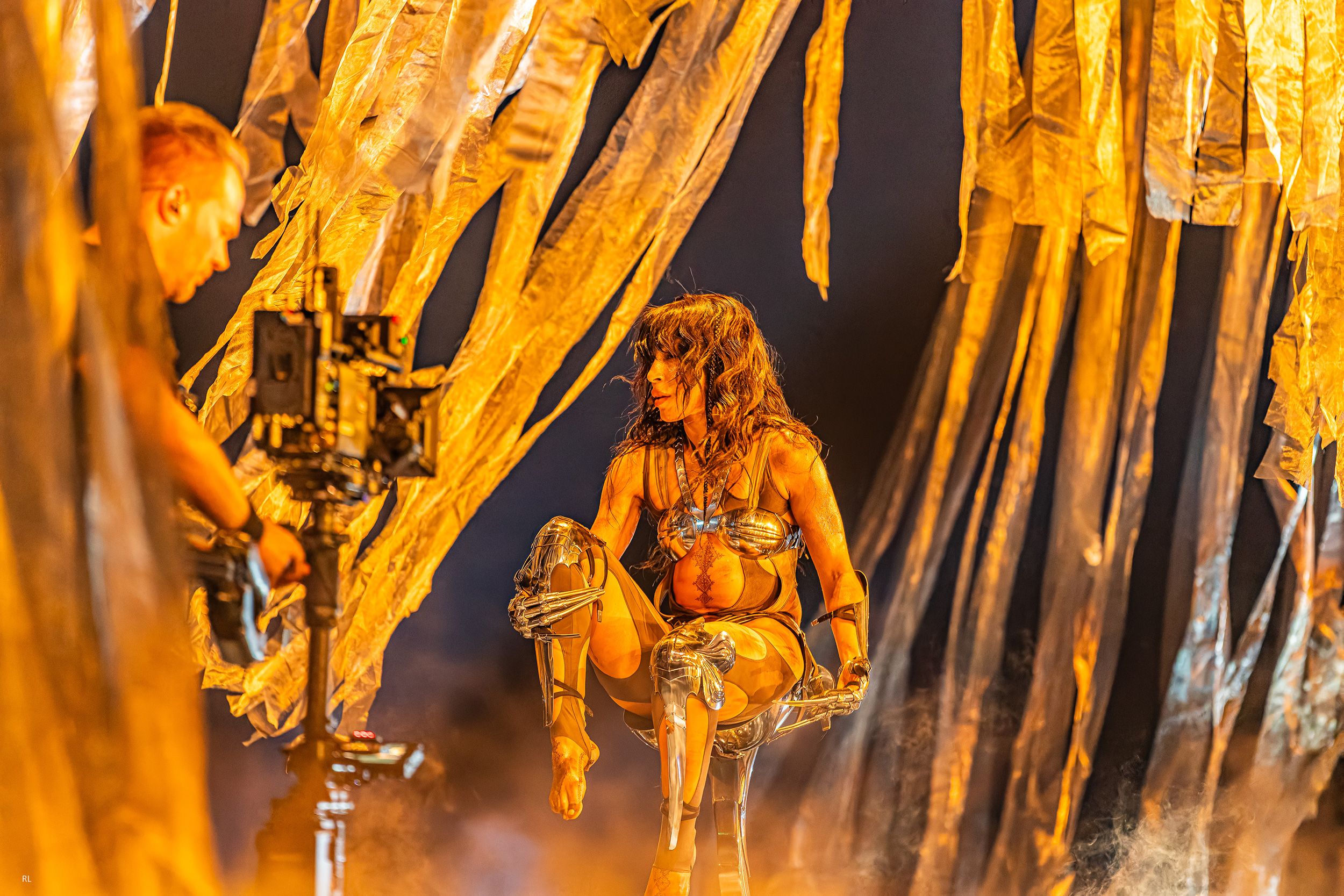 © Ralph Larmann | Sony α1 + FE 70-200mm f/2.8 GM OSS II | 1/160s @ f/2.8, ISO 4000
Working wide-angle has other challenges, which the Alpha 1 helps Ralph conquer, too. “Dynamic range is a huge concern because stage lighting and pyrotechnics are so bright and unpredictable,” he continues. “There’s fire, lasers, smoke, wild swings in colour temperature… so I rely on the camera’s brilliant 14-bit Raw files to help give me the best quality in editing. I process images individually, because no single one has the same lighting, but thanks to the Alpha 1’s 30fps burst mode, I can pick out the exact moment I want.”
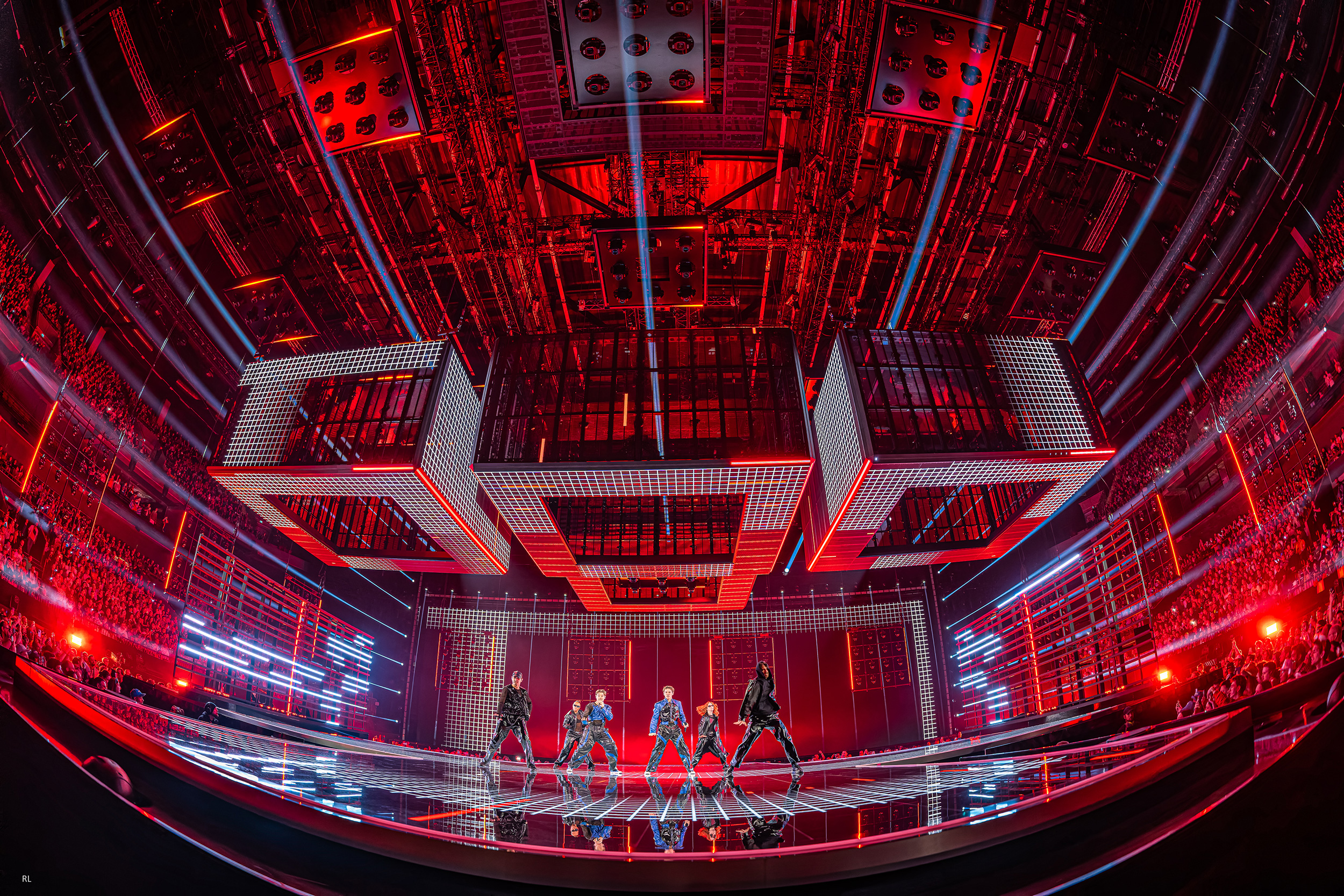 © Ralph Larmann | Sony α1 + 15mm f/1.4 Fisheye | 1/160s @ f/1.4, ISO 1250
The camera’s amazing 50-megapixel resolution is also important to him as a way of communicating what he feels at gigs and shows. “All those pixels mean I can make huge 2m prints that really immerse the viewer in that live music experience,” he confirms, “and so they can lose themselves in the moment, too.”
Finally, what about Ralph’s own energy? “I have plenty,” he laughs “because shooting events like Eurovision never feels like work. But you have to be careful with your energy. It has to go in the right direction, so make sure you follow what you love. When I’m shooting music with my Sony gear, I know I’m in the right place, and I feel the same energy coming right back at me.”
Featured products


Ralph Larmann | Germany
"For me it's all about making the magic of a moment in my photography alive"


