Seals of Approval
Tony Peral
On the rugged Atlantic coast of north west Africa, the peninsula of Ras Nouadhibou is an inhospitable 37-mile strip of vertiginous cliffs, knife-like rocky outcrops, and wide, wind-lashed beaches. Peppered with shipwrecks and broken, abandoned dwellings, it’s a place where humans struggle to thrive. And surely this is why it’s become a literal haven for wildlife, despite its hostility.
 © Tony Peral | Sony α7R V + FE 100-400mm f/4.5-5.6 GM OSS | 30s @ f/10, ISO 100
This is where the last of the world’s Mediterranean Monk Seals – a species that’s all but extinct within the waters of its name – are making a comeback. Ironically, where the last rays of the winter sunset strike the continent each day, Ras Nouadhibou is seeing a fresh sunrise for the seals. “The Monk Seal conservation project is the longest and most ambitious ever undertaken with an endangered species,” explains photographer Tony Peral, whose task it’s been to document the efforts of the conservationists and their beautiful subjects.
“Spanning late 2022 to early 2023, it was my task to assist an NGO called ‘CBD Habitat & Annajah’ in building up a bank of images and videos of this last remaining breeding colony,” he continues, “and obviously it was an extremely exciting opportunity to be part of this ambitious project. Undoubtedly, it’s been one of the most successful in the world in terms of recovering an endangered species – a benchmark of success that’s taken 20 years of hard work.”
The project focused on securing and protecting breeding grounds and wider habitats, through monitoring and safeguarding measures – measures that were sorely lacking before. “Up until 2001,” Tony explains, “this, the world's last great monk seal colony, had no protection whatsoever. Fishing boats would illegally drop their nets in front of the caves where the seals bred, while trawlers fished very close to the shore, sweeping away everything, including the seals.”
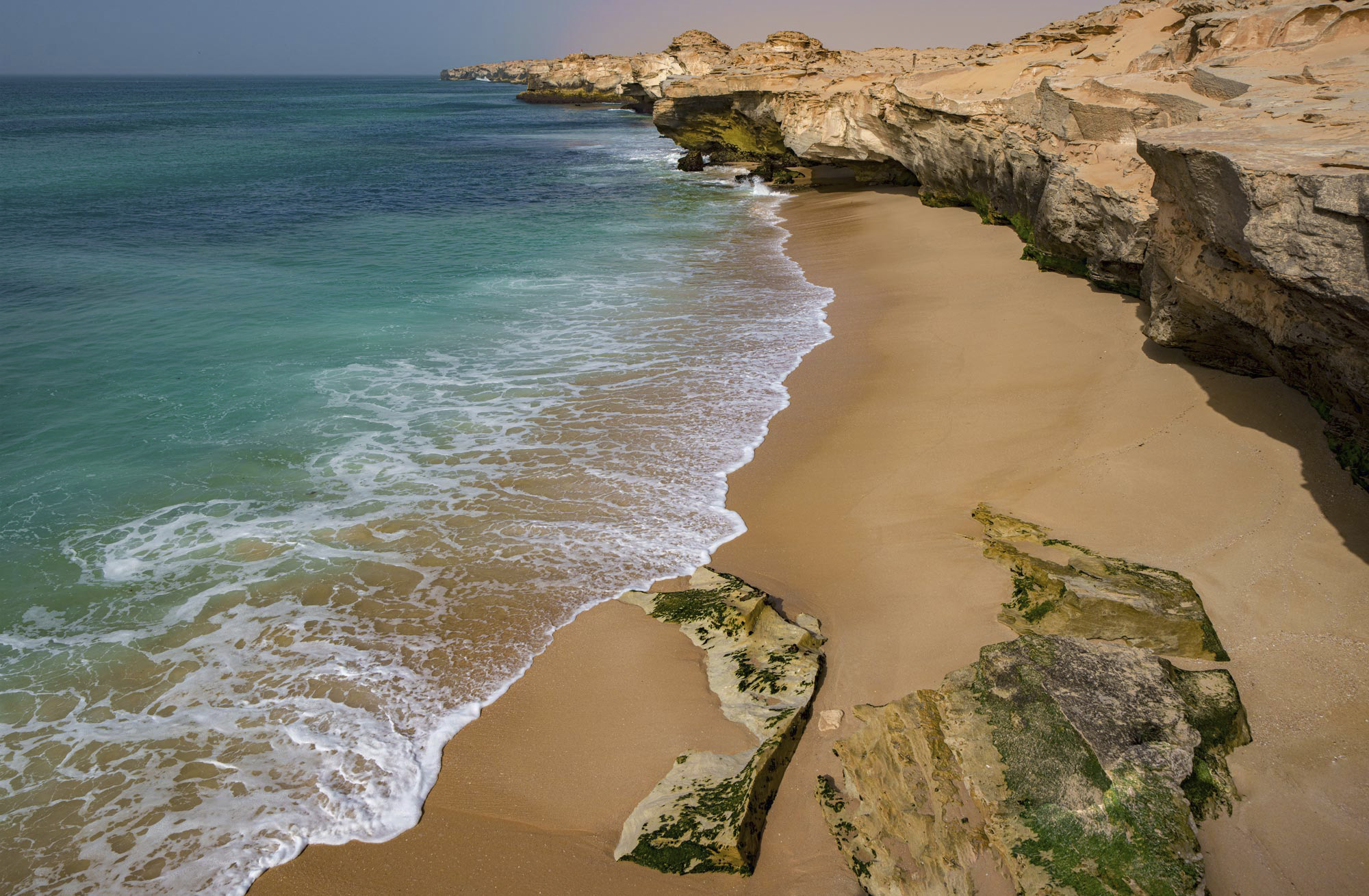 © Tony Peral | Sony α1 + FE 12-24mm f/4 G | 1/640s @ f/10, ISO 125
“This stretch of coast is abundant in fish and so without a doubt one of the best places on the Atlantic coast for the seals to find a continuous supply of food,” Tony says, “but the seals used to breed in a natural way on the peninsula’s wide-open beaches. They retreated to the caves due to this historic persecution, confining themselves in what is a more dangerous and hostile environment than they’d prefer, and where the mortality rate of the seal pups is very high.”
“But in 2001, the Seal Coast Reserve was created,” he continues, “and with the collaboration of local fishermen it meant protection for the breeding caves at Cabo Blanco, 365 days a year. The benefit of these measures is clear to see and today the colony has tripled in size, meaning that we can now go a step further and begin returning the seals to the beaches where they used to breed.”
 © Tony Peral | Sony α7R V + FE 100-400mm f/4.5-5.6 GM OSS | 1/500s @ f/5.6, ISO 1250
Though the seals are recovering along its shores, Ras Nouadhibou cannot be said to be ideal for photography. “The peninsula is a harsh environment at the best of times,” Tony confirms, “but shooting in winter, and with the location sandwiched between the ocean and the desert, it really pushed myself, my crew, and my equipment to their limits. What’s more, the terrain makes it very difficult to find angles to work from. In fact, most of the spotting and seal watching is done from the very top of the cliffs. Most days we were shooting with the desert sand blasting us from one direction, while gigantic waves pounded the cliffs below.”
“We also had to cover the coast for miles and miles to spot the seals that were on their way to fish,” Tony continues, “and do that from dawn to dusk, to match their activity. This was made more difficult, by the fact we were working in a place with no electricity, meaning we had to develop a strategy to both run the equipment and – because we were filling cards with 4K video – to download and back up footage.”
The ruggedness of his Sony Alpha gear was vital to success, Tony says, with him routinely using two camera bodies on the project, “the first an Alpha 1 and the second an Alpha 9 or an Alpha 7, depending on the type of work I was about to tackle. My main lenses were the FE 600mm f/4 GM OSS, which was vital in picking out the seals from cliff tops, as well as the FE 100-400mm and FE 70-200mm zooms. I can say that it’s photographic equipment of the highest technological calibre. Constantly buffeted by the dust, salt, and sand-laden wind, their performance and endurance were the best a wildlife photographer could wish for.”
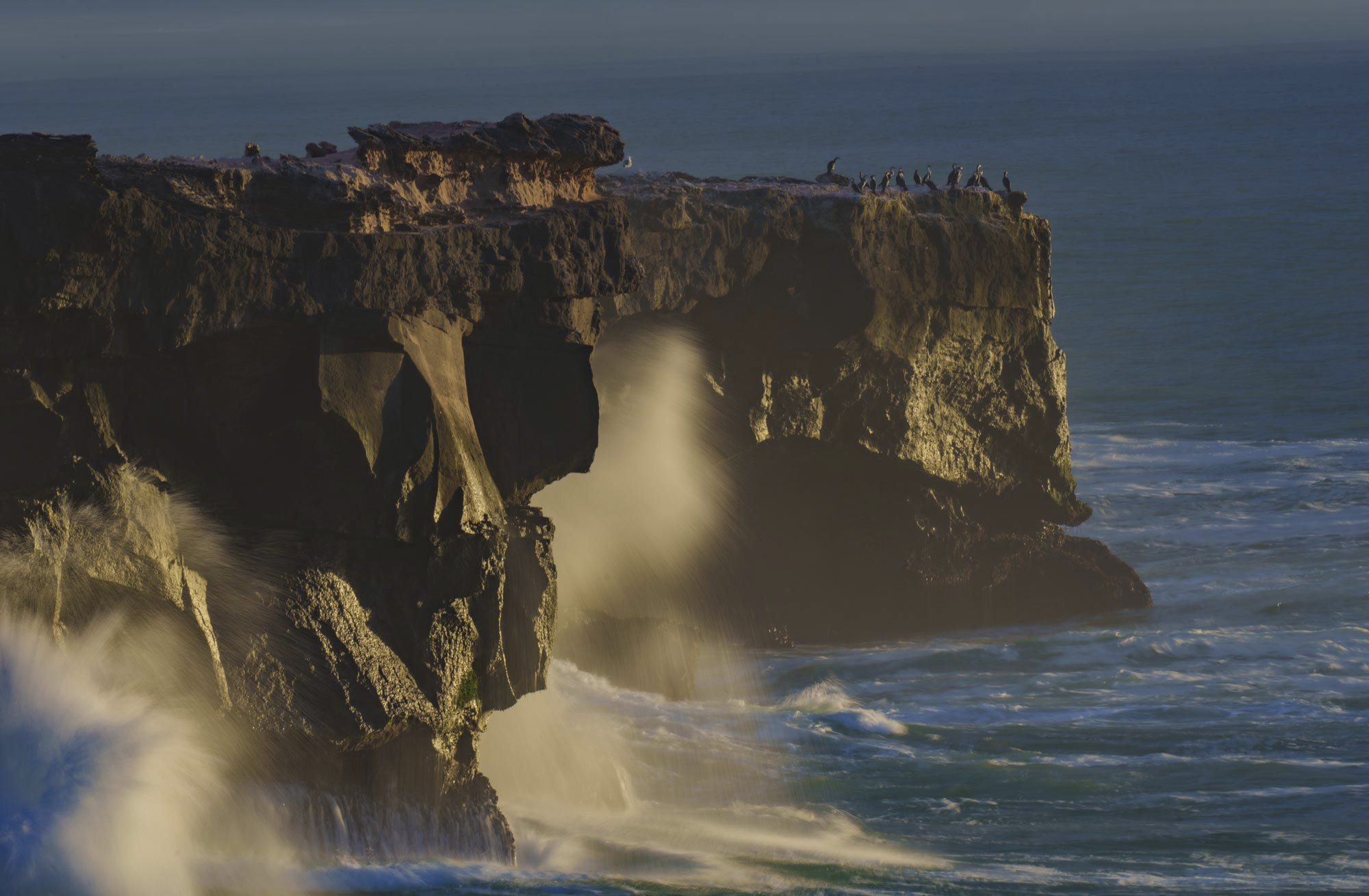 © Tony Peral | Sony α1 + FE 600mm f/4 GM OSS | 1/6s @ f/22, ISO 100
As tough as the conditions were, the coastline was still a magical place. “Knowing the history of this species made it even more exciting”, says Tony. “This colony has taken refuge in such a remote and secluded place that you can really appreciate the wildness and untouched nature as far as the eye can reach. It’s a unique combination where hostility and peace go along in harmony.”
It was also a place that inspired him to produce some amazing images. “I’m particularly fond of the close-up shots of the seals,” he says, “because due to their natural inquisitiveness, they peek out from the depths and fix their attention on anything that happens on the cliff top. But it was also important for me to document the hard work of the experts who are ensuring the safety of the seals and their environment. We spent time with them at the camp, and their commitment was admirable. Their duty is to repeatedly cover the entire area of the reserve and its colony, to identify threats and verify its good health.”
 © Tony Peral | Sony α1 + FE 600mm f/4 GM OSS | 1/2000s @ f/5.6, ISO 4000
“We also spent time capturing some of the interactions between the local fishermen and their neighbours,” he remembers. “With the help of the project, which supports them to develop a responsible and sustainable way of fishing, they’ve eventually come to respect and accept the seals as another player in the game.”
This support and education can only be reinforced by photography, says Tony. “It’s been so important to document the project from all these different viewpoints: social, conservation, operation, environmental, all alongside the seals and their breeding caves, and through these images and video we can help people understand the scale and successes of a project that’s in such a remote place, that they would not be able to see it otherwise.”
“The monk seal project will carry on for many years to come,” he concludes, “and once a suitable number of individuals has been achieved in the colony, the monk seals will be introduced to new areas where new breeding colonies can be established, hopefully even returning them to the Mediterranean. We’ve witnessed first-hand how one of the longest-running projects to save a species from extinction can flower and grow, and I hope to stay involved in this project in order to be able to follow this evolution and document it with my photographs.”
 © Tony Peral | Sony α7R V + FE 100-400mm f/4.5-5.6 GM OSS | 1/500s @ f/4.5, ISO 1000
“I firmly believe in the power of nature photography to raise awareness, and I also believe that the wildlife photographer must have a special commitment towards nature. In my opinion our work should be in one way or another closely linked to the conservation of our natural heritage.”