
Light Up Your Life
Burak Bulut Yildirim
The feeling of discovery is one of the most exciting in photography. It goes for new subjects, new achievements, and also new techniques. For Burak Bulut, that feeling of discovery was when he began working with UV light.
“As a photographer, you love to play with light,” Burak explains, “but it’s visible light most of the time. That means moving or modifying lights in the studio or working with the sun to create the look you want. I had an epiphany when I started using UV light and neon makeup.”
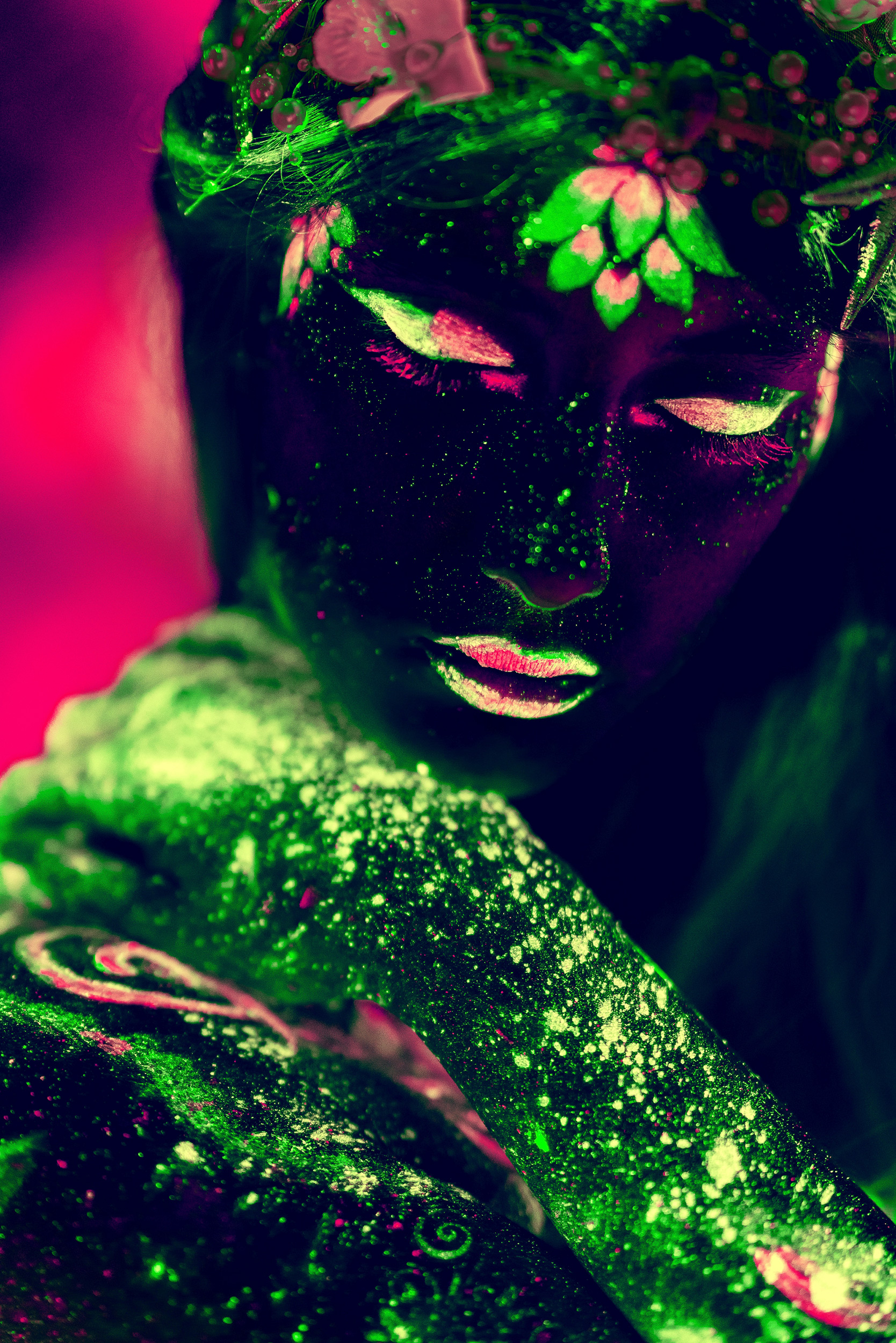 © Burak Bulut Yildirim | Sony α7R III + FE 85mm f/1.4 GM | 1/100s @ f/1.6, ISO 2000
Burak likens the revelation to his first experiences with light painting. “Something clicks in your head,” he says, “and you suddenly think, ‘oh, this is so expressive, it could have some amazing possibilities.’ We’re still shining light on a subject with light painting, but with UV light and makeup, the model’s skin becomes the light.”
As a lighting teacher as well as a photographer, Burak was intrigued by the technique “I always try to push the boundaries of creativity, especially in my lighting,” he explains, “and it was no different when I started with UV light. But there was a lot to learn and experiment with.” The setup is simple, he says, but takes some adjustment. “Basically, the neon makeup looks very dull under normal light, but under UV – or ‘black light’ it’s often called – it glows brightly.”
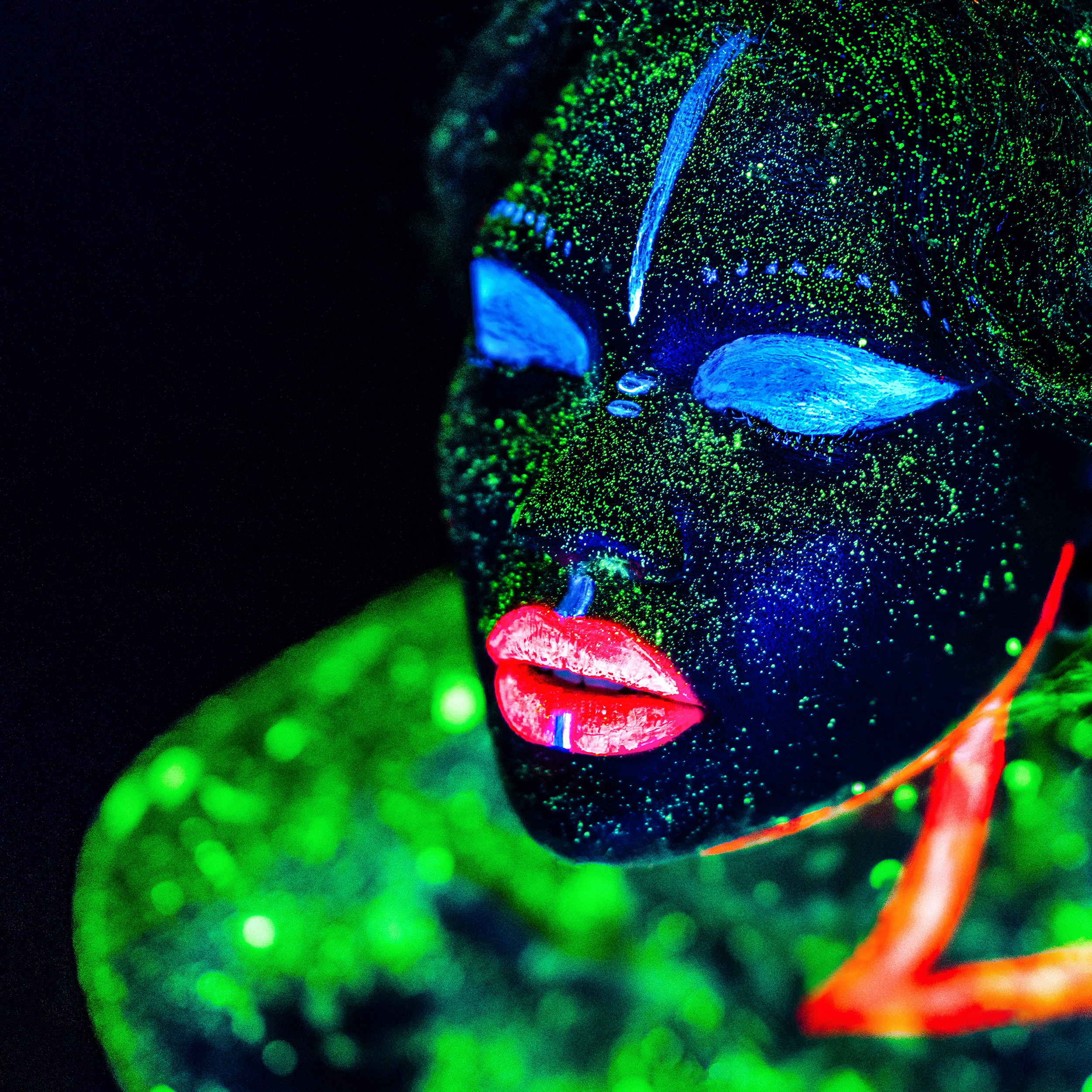 © Burak Bulut Yildirim | Sony α7R V + FE 85mm f/1.4 GM | 1/200s @ f/1.4, ISO 2000
“However, you can’t use any old UV light because some can be dangerous,” he continues, “so we use the weakest strength. Next, you need a dark space and a black or a very dim background, because you don’t want regular light getting in the way of the effect. Anything white will reflect strongly, including the subject’s teeth!”
The darkness of a UV shoot brings challenges and opportunities, Burak says. “For one thing, the lack of regular light means we need to expose differently from a regular studio shoot,” he explains. “Even though the paint glows brightly to your eyes, it's relatively dim in photographic terms, so most of these images are made using ISO settings that would be unusual for portraits, like 3200 or 4000. And we need to use fast lenses with settings like f/1.4 or f/2.8.”
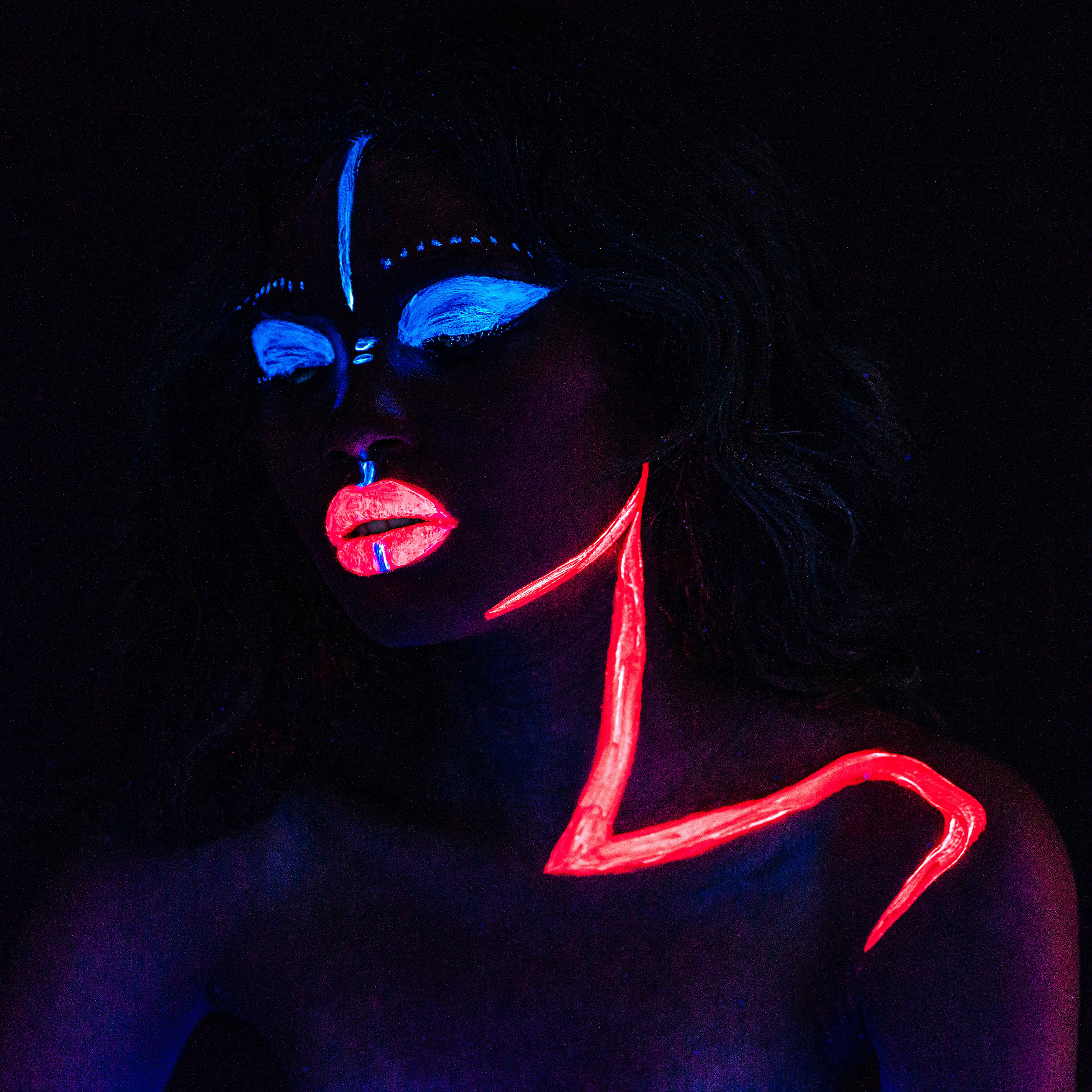 © Burak Bulut Yildirim | Sony α7R V + FE 85mm f/1.4 GM | 1/80s @ f/2.8, ISO 3200
Conversely, Burak points out, the lack of light makes slower shutter speeds more accessible, which leads to some of his most striking UV images. “It was a happy accident the first time I made one of my blurred UV images. I was just moving the camera to see what I could make,” he says. “Now it’s something I do often, because any movement from me or the subject creates light trails from their glowing skin.”
The discovery allowed Burak to build on the technique, using subjects like dancers. “I’ve used ballerinas for this project, because their movements look even more amazing with the glowing makeup. I can set the camera on a tripod, lower the ISO or close the aperture to slow the shutter to 1 or 2 seconds and get them to pirouette. It looks like a trick, but it’s just the streaking of the light and the talent of the dancer. Doing it with the camera handheld can add even more energy and motion.”
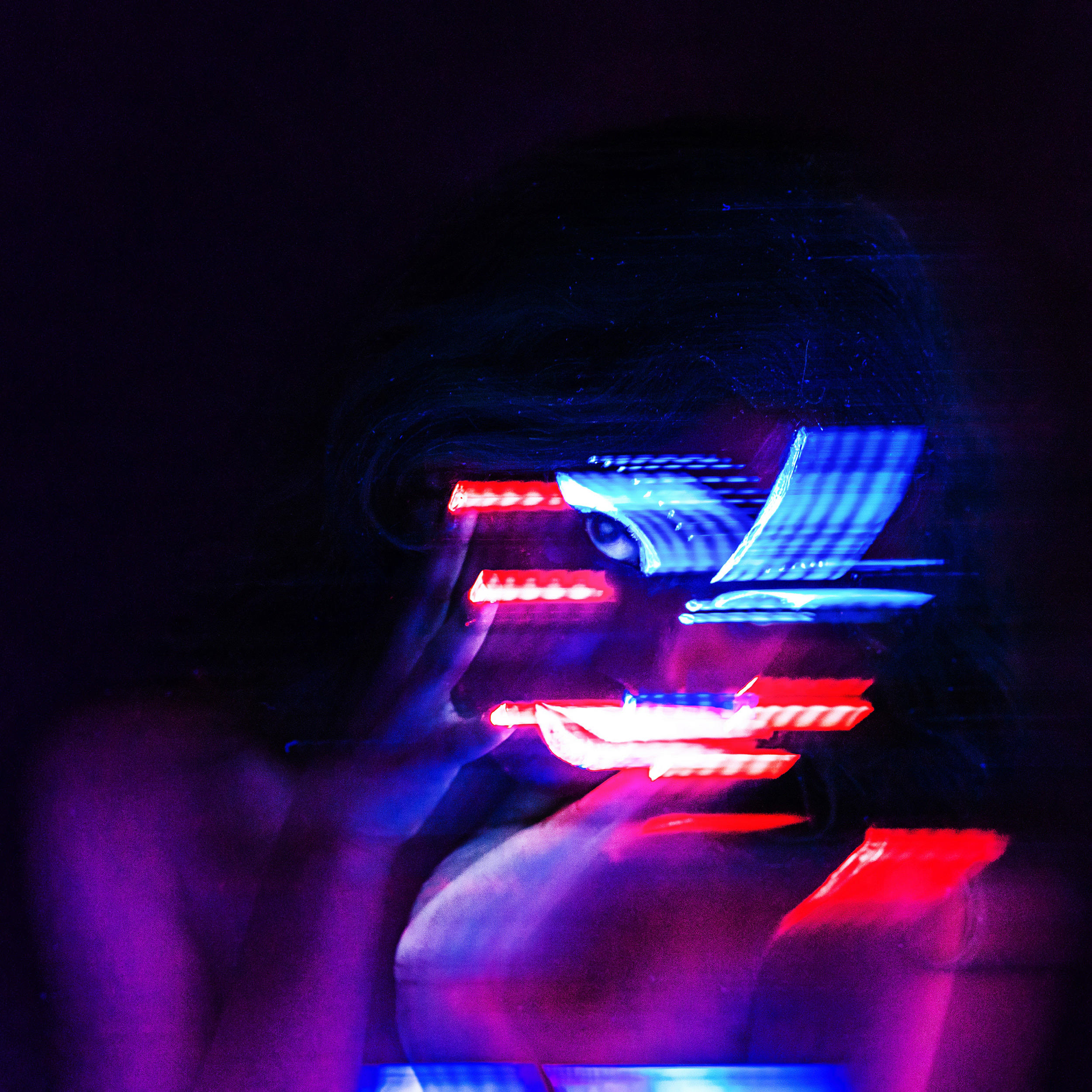 © Burak Bulut Yildirim | Sony α7R V + FE 85mm f/1.4 GM | 1/13s @ f/2.8, ISO 3200
For his latest UV work, Burak has been using the Sony Alpha 7R V and Alpha 7R IV, principally for the cameras’ exceptional dynamic range and resolution. “With the dark background and glowing makeup, there’s so much contrast in these images that many cameras lose tonality in one area or the other,” he says, “but with these cameras, every subtle tone is recorded along with the intricate neon makeup details, providing an almost three-dimensional quality to each portrait.”
“What’s more,” he continues, “the high resolution allows the subject’s skin texture to appear perfectly lifelike. That’s important because these are quite abstract looking images, so if you lose that detail it can look fake, as though it’s been painted or made digitally. The detail of the Alpha 7R cameras keeps it photographic.”
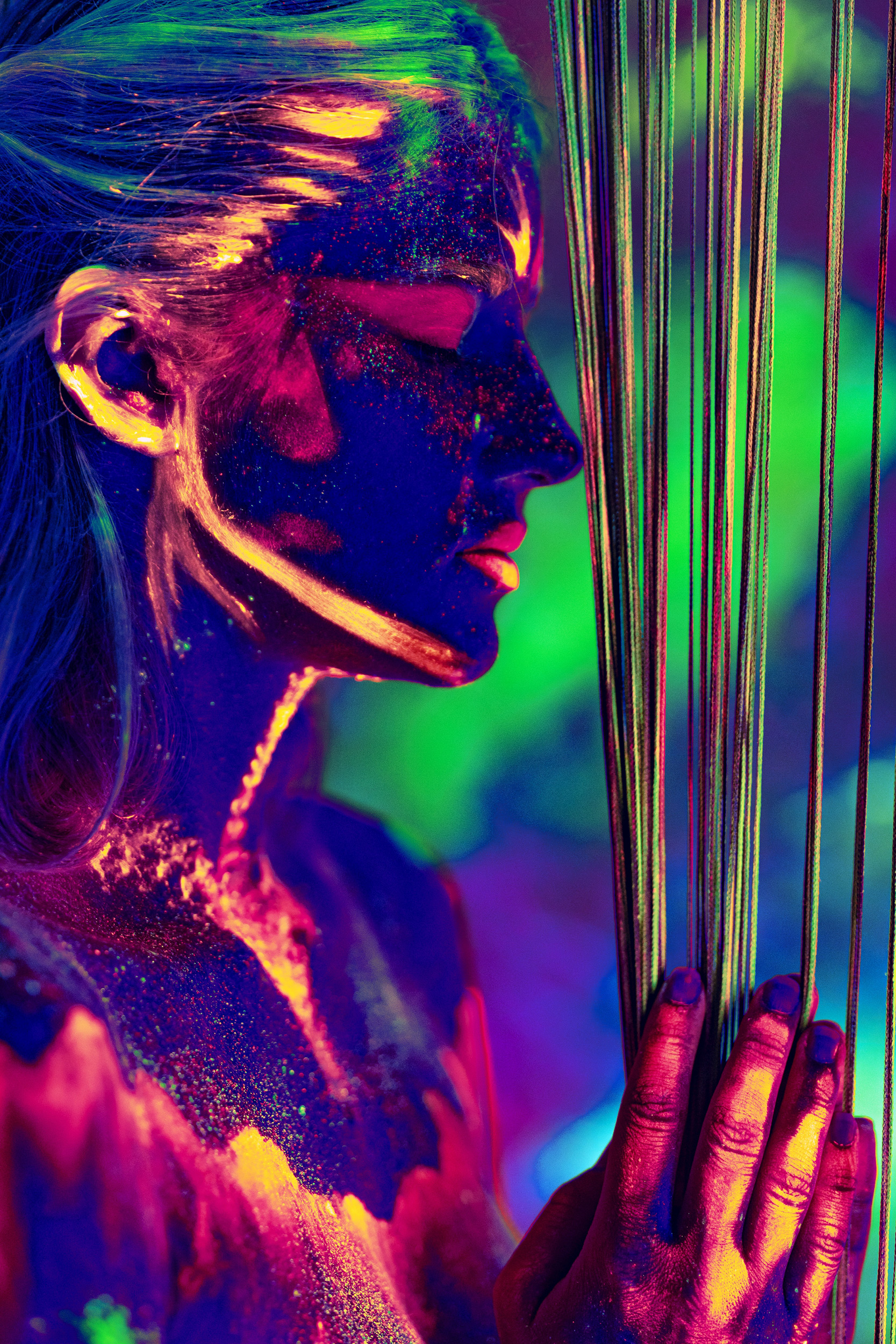 © Burak Bulut Yildirim | Sony α7R V + FE 85mm f/1.4 GM | 1/60s @ f/2.2, ISO 1600
Working in the dark, Burak also leans on the speed and accuracy of his Sony cameras’ autofocus. “Even with the abstract makeup, the autofocus isn’t fooled,” he reports, “and it keeps locked on during the dancers' fluid movements. Using fast primes lenses like the FE 85mm f/1.4 GM and FE 55mm f/1.8 ZA also helps a lot,” he continues, “because they give the sensor more light to focus with. And I love the bokeh that they create.”
But one of Burak’s most exciting discoveries has been that his creative ideas with UV light are still developing. “I want to try it in all sorts of different ways,” he says, “and because I’m working with Sony equipment there’s no barrier to that. The high resolution, exceptional optics, and superb low-light capabilities let me realise any artistic idea I have.”
Featured products


Burak Bulut Yildirim | Turkey
"My camera is my only tool that allows me to communicate in the language of light with the world and the people I photograph."


