
Lens Profile | FE 24mm f/1.4 GM
Stefanie Liebermann
Despite having a master’s in physics, photographer Stefanie Liebermann finds a certain magic about shooting Astro photographs. ”It’s like opening a gift at Christmas,” she says, “you don’t know what you are going to get, so there is always excitement.”
With long exposure times, often in minutes, you can never be sure exactly what the images will look like when you finally get to see the exposure, and for Stefanie, this creates a space where physics meets art. “I’m always excited and that is why I love to travel around the world to cool places with my Sony kit.”
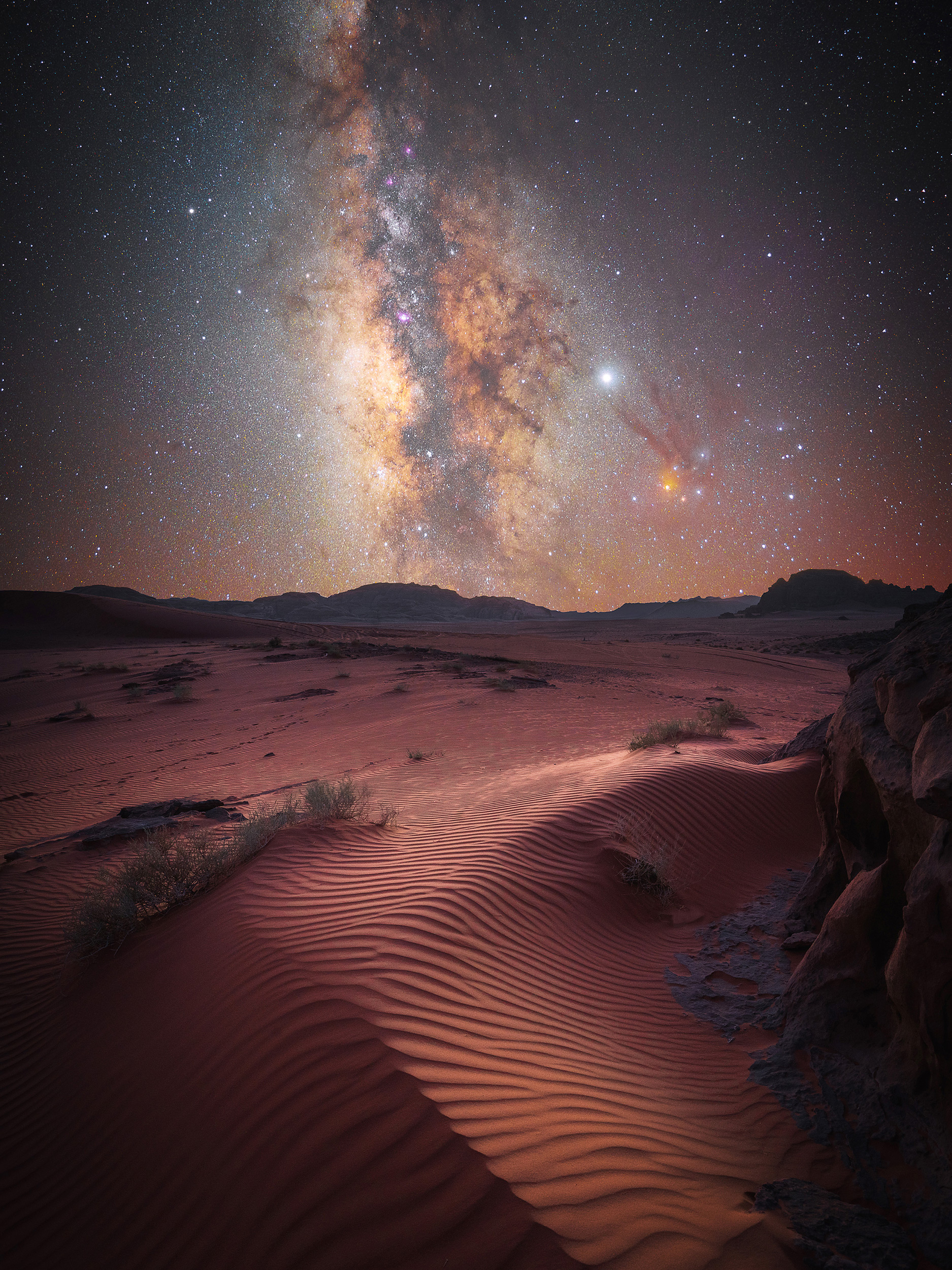 © Stefanie Liebermann | (Foreground) Sony α7 III + FE 24mm f/1.4 GM | 20s @ f/8.0, ISO 800, (Sky) Sony α7 III + FE 24mm f/1.4 GM | 272s @ f/2.4, ISO 1000
Stefanie uses a variety of Sony cameras depending on what she is shooting. “I have an Alpha 7 R III, which I have infrared modified to expose the H-alpha nebulae and all the more visible details in the infrared spectrum. And I also have an Alpha 7 IV and Alpha 7R V.” Then there is the FE 24mm f/1.4 GM which is one of Stefanie’s favourite lens to photograph the night sky “It’s just tiny - so small and lightweight, meaning I can take it with me at all times.” she says. It’s a lens that Stefanie uses in various ways; “I can shoot at f/1.4, which gives me a good short exposure time when shooting a workshop. But if I shoot with a star tracker, I can stop the lens down to f/2.8 and use a low sensitivity. It gives an amazing image quality that produces crisp stars without vignetting and coma.”
A star tracker is a device that counters the movement of the Earth’s rotation, so during a long exposure, the stars in the sky remain points rather than star trails. “The star tracker allows me to stop down from f/1.4 to f/2.8, and the shots always look better than if I were using a lens with an f/2.8 maximum aperture. I just love the quality of the shots.”
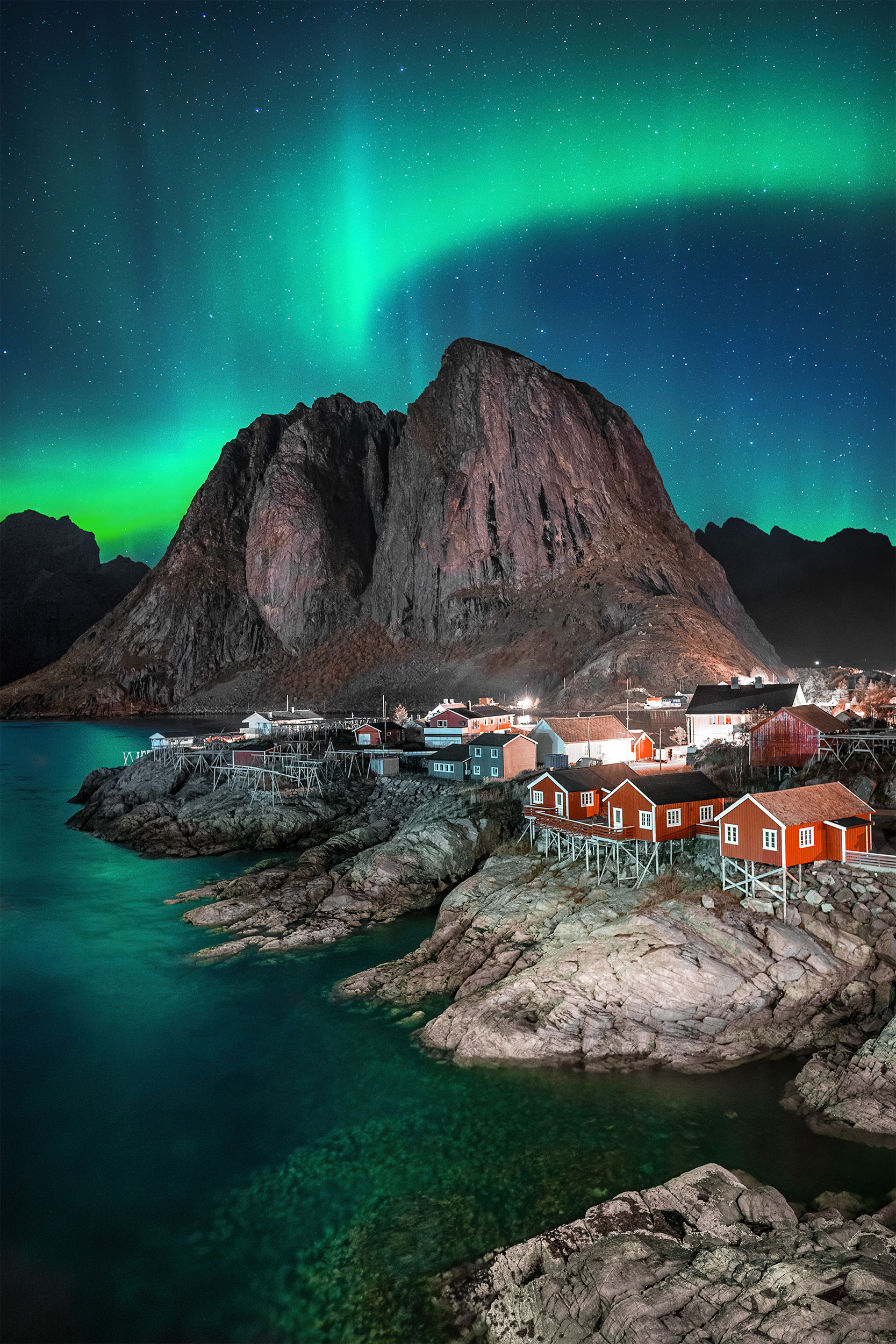 © Stefanie Liebermann | Sony α7 III + FE 24mm f/1.4 GM | 10s @ f/2.0, ISO 2000
What stands out in Stefanie’s shots is the landscape in which the image was taken. The landscape adds context and scale to the image, while the night sky remains the main subject. “Sometimes during a shoot, I will turn the star tracker off, then make another exposure with low ISO values and long exposure times. Of course, the stars will be blurred, but the exposure looks great on the landscape. The image with the star tracker is the opposite; the stars are perfect, but the landscape is blurred from the rotation. But I can combine the two images of the foreground and sky into a single image. Sometimes I wait for blue hour if I have dynamic foregrounds, because then you can shoot with lower exposure times and get amazing results.”
In a landscape shot like this, the Milky Way is the main subject, and the 24mm focal length is perfect for capturing as much of the galaxy as possible. Stefanie uses the focal length in various ways. “I love the abilities; I can use it at f/1.4 to take a quick shot at night with an exposure time of 10 or 15 seconds. That also means that I can use a panoramic tripod head to make a series of shots that I can stitch together to create a superwide view. Or I can stop down to f/2.8 and use the star tracker to have a perfectly clear and crisp night sky. It gives me two different opportunities.”
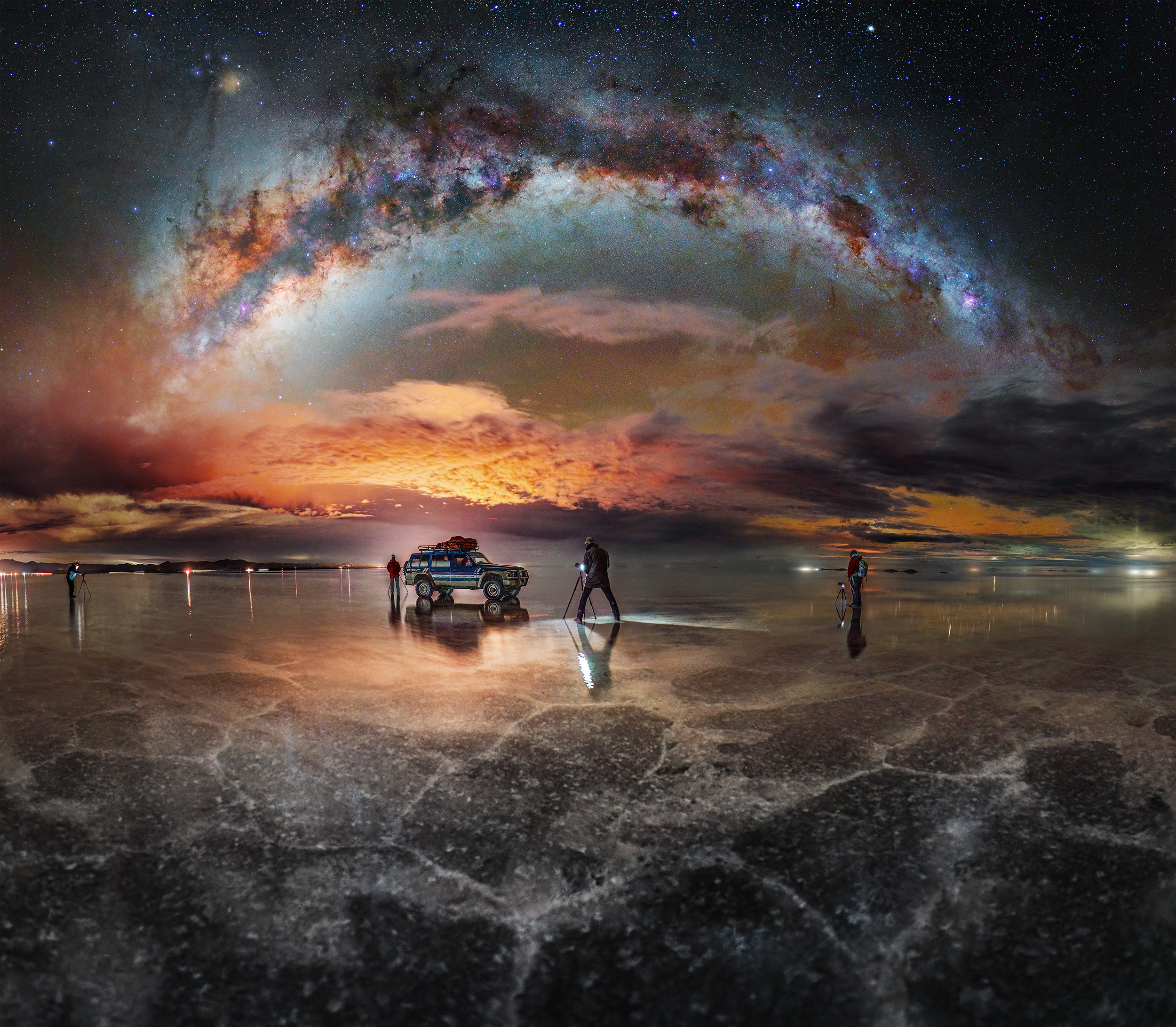 © Stefanie Liebermann | Sony α7R V + FE 24mm f/1.4 GM | 15s @ f/1.4, ISO 3200
Stefanie used a stitched panorama technique in her image taken at Salar de Uyuni, taking multiple images with the 24mm lens and f/1.4 aperture to capture the incredible scene. “I was a photo tour guide in this shot, and I wanted to take a photo of the group and our vehicle. I used the panoramic head and told everyone to stay still for a minute while taking the images. This type of image is more about storytelling and the moment.”
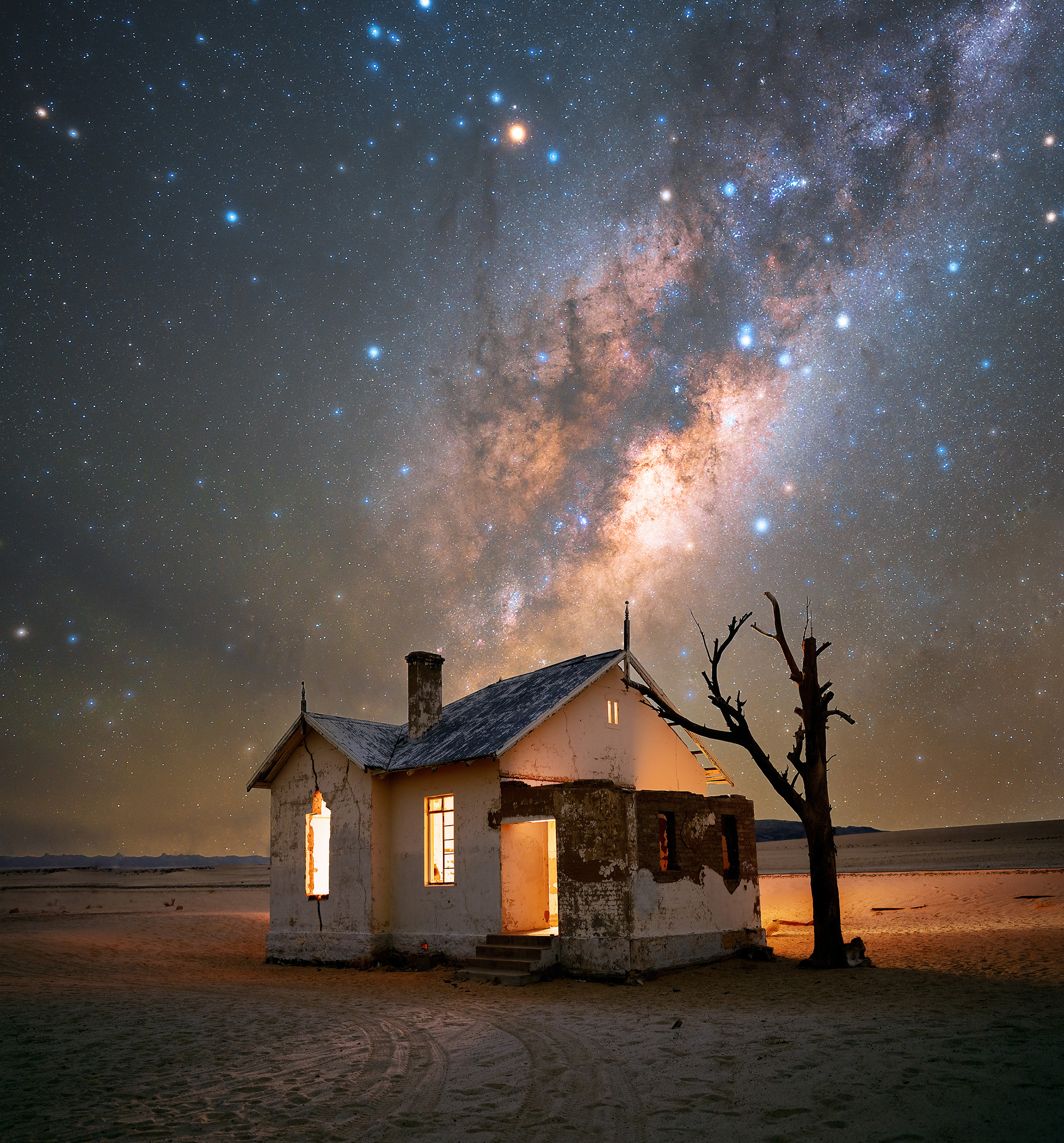 © Stefanie Liebermann | (Foreground) Sony α7R V + FE 24mm f/1.4 GM | 120s @ f/1.6, ISO 1000, (Sky) Sony α7R V + FE 24mm f/1.4 GM | 270s @ f/1.6, ISO 800
Another shot taken in Garub, Namibia, perfectly shows the other technique. In this shot, Stefanie used a star tracker with a 24mm lens and long exposure to capture the magnificent display of stars and planets. Then, a second, much shorter image, was taken to capture the derelict building and tree in the desert foreground. Finally, the two images were merged together to create the final striking result.
One thing the camera sees that isn’t always visible to the naked eye is space's colour. “I like to create a harmonious look by matching the sky colour tones with something in the foreground. For the Milky Way, I might shift the white balance from 3,900K to a bluer 3,700k to match something in the foreground like the blue roof of a building or something. I think you have to have an artistic approach and respect every photo.”
Featured products


Steffi Liebermann | Germany
"It's a very special kind of photography: Not visible to the human eye, but real"


