Image Focus
Gustav Kiburg | Swan
As a wildlife photographer, I strongly believe that you have to make your own luck and take your chances. I took this photo early one morning in the Italian Dolomite mountain region. There was fog between the mountains and fog and mist on the lake. I was with other photographers on the Sony Kando trip, but I decided to walk around and try to take different pictures of the lake.
When walking around, watching the scene, I could see the occasional trout jump out of the water, and I spotted a swan gliding on the water surface. In the background, there was a mountain on either side, and the swan was perfectly framed in between, making a great shot. So, I positioned myself to capture the swan in the beautiful scene with my Sony Alpha 1 and FE 70-200mm f/2.8 GM OSS II lens in hand.
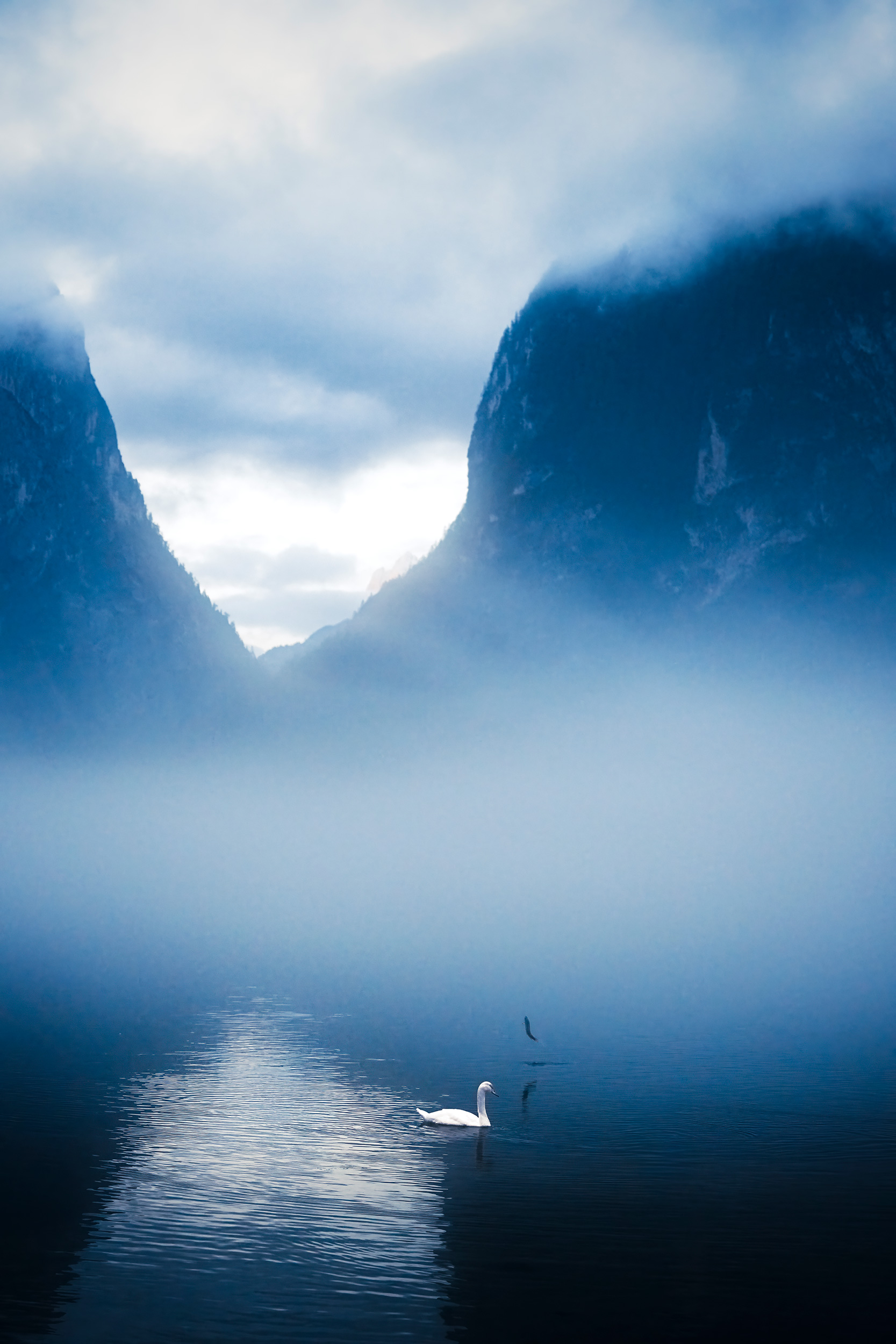 © Gustav Kiburg | Sony α1 + FE 70-200mm f/2.8 GM OSS II | 1/3200s @ f/2.8, ISO 4000
When shooting wildlife, I always have my camera set to burst mode and shoot at 10 or 20fps. I pressed the shutter button to take a photo, and I must have taken six or seven photos in burst mode. As I pressed, a trout suddenly jumped out of the water, and I managed to capture it perfectly. It was incredible timing, and nobody believed that I had captured it perfectly composed, I was so lucky.
But after a while, and because I have been a wildlife photographer for a long time, I know that if you take your chances and practice repeatedly, then your chances of getting an even greater picture are much higher.
I always shoot with the Sony Alpha 1 because it gives me everything I need as a wildlife photographer. Not only does it have the ability to shoot 50-megapixel images at an incredible rate of 30fps, but I also know I can rely on the image quality of the Sony Alpha 1. I always have the camera set to continuous autofocus, with the focus tracking set for Animal or, as in this case, Bird. In this image, the Alpha 1 tracked the focus of the FE 70-200mm f/2.8 GM OSS II lens on the eye of the swan. Because the trout was just behind the swan, it was still within focus for the aperture setting. My shutter speed was also fast enough to capture the leap because I left my camera set to the high ISO Sensitivities I need for my wildlife photography.
Of all six pictures with the trout in them, I knew this was the best, as its tail is slightly bent, showing the movement of the jump. I love this photograph because it’s also a little dark. The early morning fog makes it feel mysterious, and the minimal composition of the mountains is great. It feels much more special than if it had been the same shot and composition taken in the middle of the day.
Featured products


Gustav Kiburg | Netherlands
"Bad weather is colour weather"


