
Critical Minerals
Davide Monteleone
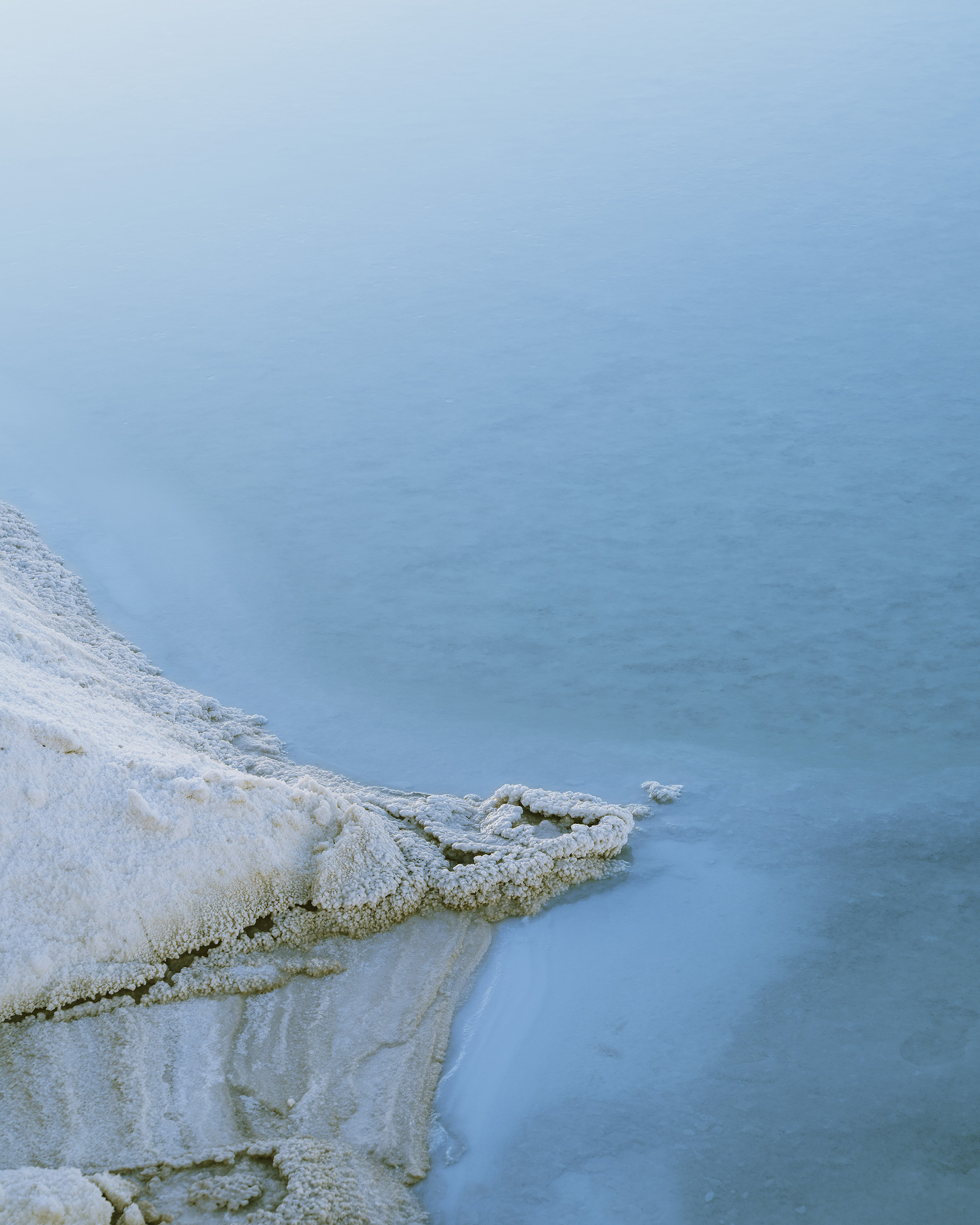
As the world shifts to renewable energy, photographer Davide Monteleone’s “Critical Minerals - Geography of Energy” project explores the impact of the transition that the end consumer doesn’t always see. “I want to underline the fact that I fully support the switch to renewable energy”, says Davide, “but I also want to understand exactly what that shift means. What resources do we need to achieve this goal? What are the consequences of new extraction policies? What are the effects on communities, the environment and the global economy?”
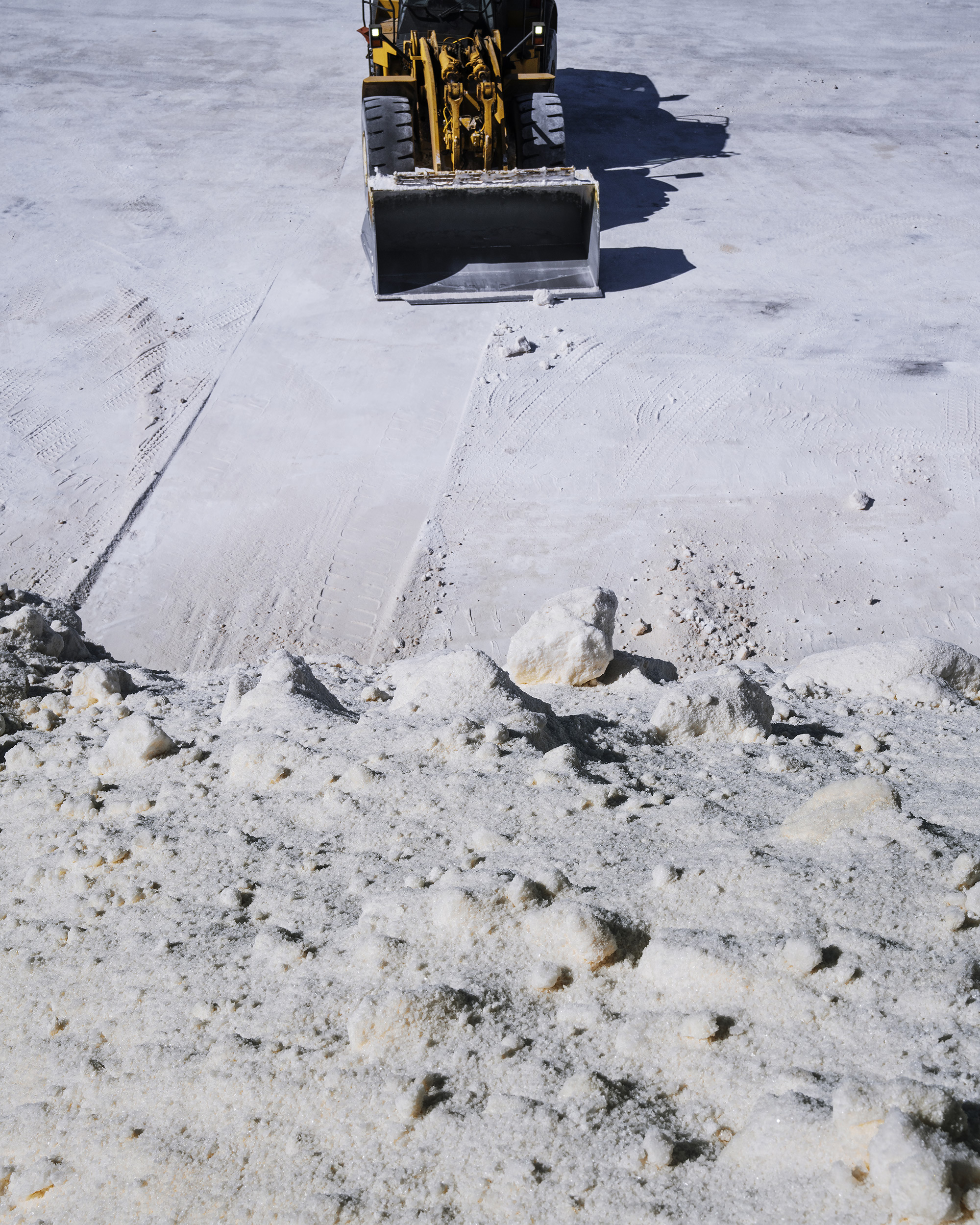 © Davide Monteleone | Sony α7R V + FE 16-35mm f/2.8 GM | 1/800s @ f/10, ISO 100
Critical Minerals is a collaborative project, with Davide working with local storytellers and a data visualiser to create multi-media work that combines photography, video, mapping and data visualisation. It is a multi-pronged approach in a time when we have all the world’s knowledge in the palm of our hands. “We live in a specific moment of our history where information is extremely abundant, if not infinite, while attention is a scarce resource”, says Davide “The project is an attempt to talk about a subject which is mostly available and discussed already, but to give it different layers of understanding and consciousness.”
The project took Davide to various locations globally where the minerals for renewable energy are mined, and his Sony cameras and lenses came with him to document the stories he discovered. “I used the Sony Alpha 7R V, which is extremely versatile for all purposes. It's a light camera and produces extremely high-quality images. The 10fps shooting rate was useful for capturing a series of images in scenes involving multiple people. The camera's dynamic range is extraordinary; it becomes noticeable in high-contrast scenes, where you can generally recover detail in post-production. It was the main camera that I used, along with the Sony Alpha 7S III to shoot some video elements of the project.”
 © Davide Monteleone | Sony α7R V + FE 24-70mm f/2.8 GM | 1/50s @ f/5.6, ISO 800
Many of the images show the juxtaposition between the efforts to switch to renewable energy and the localised impact on communities. “I guess in all my work there is an aspect which is pedagogical, and tries to explain what happened, what is happening, and eventually even what may happen in the future if we don't do something.”
 © Davide Monteleone | Sony α7R V + FE 24-70mm f/2.8 GM | 1/125s @ f/5.6, ISO 125
Most of Davide’s images were taken with what he describes as ‘The Swiss Army knife’ of lenses - the Sony FE 24-70mm f/2.8 GM. “I also used some fixed lenses”, he reveals. “The FE 35mm f/1.4 GM and FE 50mm f/1.4 GM - but rarely unless it was for something specific like a portrait. And I also used the Sony FE 70-200mm f/2.8 GM OSS for video.”
 © Davide Monteleone | Sony α7R V + FE 24-70mm f/2.8 GM | 1/125s @ f/5.6, ISO 400
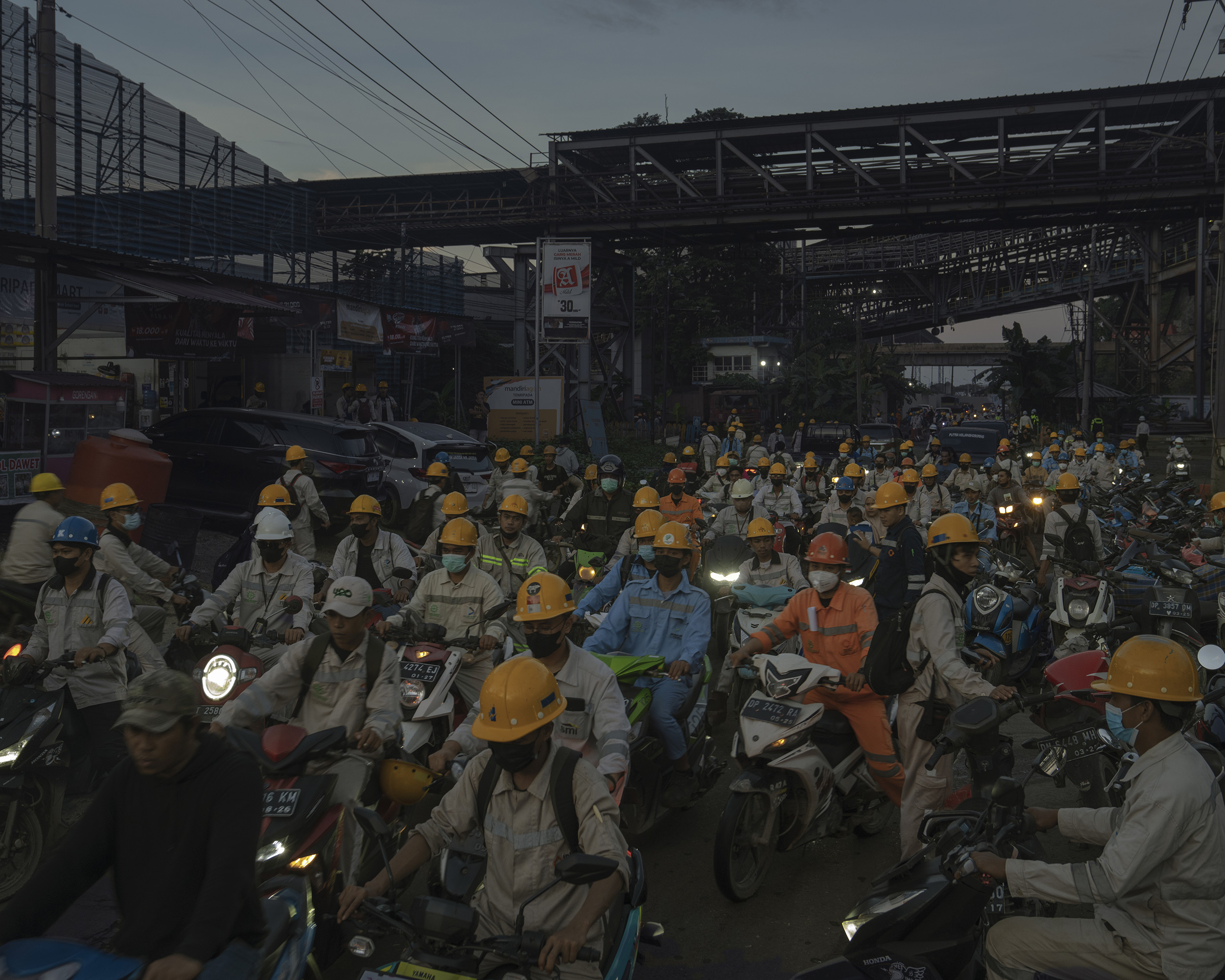
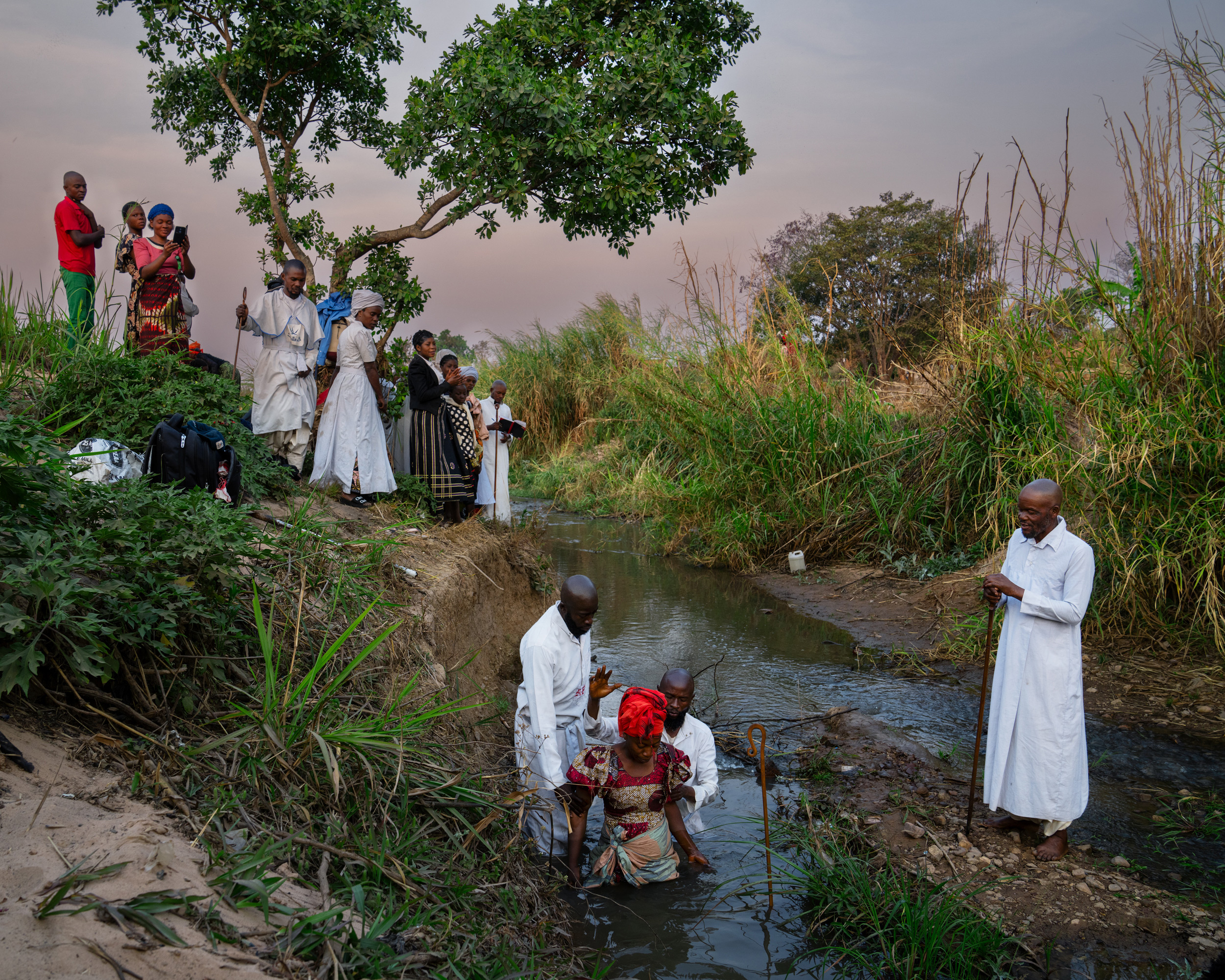
Images range from portraits of an exhausted dust-coated worker from the cobalt mine in Kolwezi, Democratic Republic of Congo, to hundreds of individuals on mopeds in Sulawesi, Indonesia, on their way to mine nickel. One image shows the human community impact “We were looking around for the effect on communities of this cobalt extraction, and bumped into this Christian community, which was praying in a field. They informed us that they were doing this baptism, and we said, ‘Okay, this could be something interesting to follow, even if it's not immediately connected to the story.’ But it was pretty close to the mining site,” recalls Davide.
“They said, ‘We have to walk about several kilometres to get there because the only place where we do the baptism is this small stream of river,’ because they believe that in that specific stream of river, there's less pollution than anywhere else - which I'm not really sure is true. We didn't really investigate that. It didn't seem so to me, but it's also interesting how the local community is not fully aware of the impact of this kind of thing. So there is a kind of ingenuous ignorance about what is actually happening.”
This is a story that Davide heard time and time again in different places. “There is this paradox - social conditions, economic conditions, to work are forcing them. They are fundamentally ruining their own land to gain a little bit of money, but they don't know exactly why and what is happening from that.”
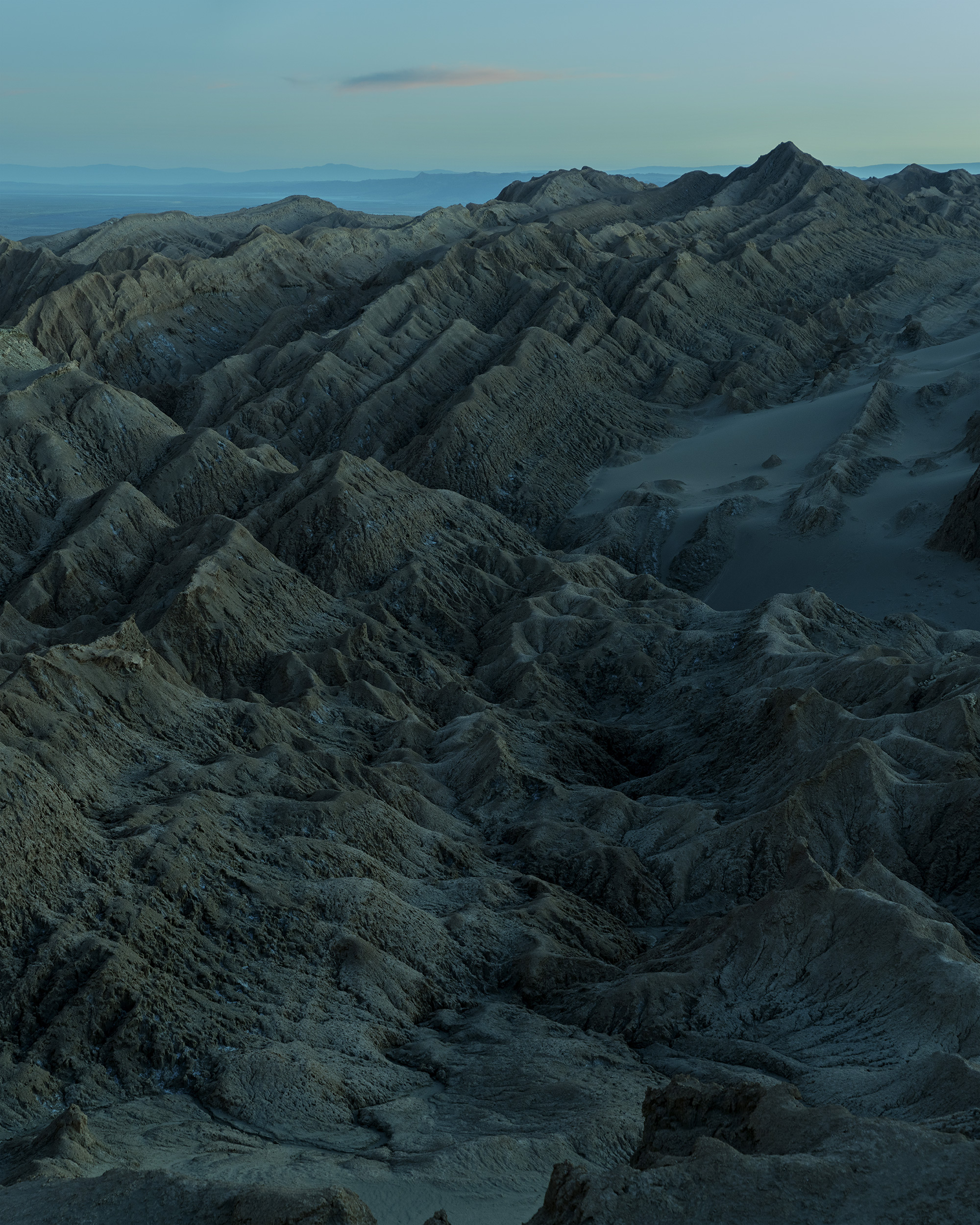 © Davide Monteleone | Sony α7R V + FE 24-70mm f/2.8 GM | 1/30s @ f/5.0, ISO 400
The project is to create an understanding as to where the critical minerals have come from and to spark a conversation. “Even when I show the project sometimes, people are surprised to discover that, oh, actually, we need a lot of lithium. "I didn't know that extracting lithium or extracting cobalt required this kind of effort.’”
“This is the purpose of my work - to unveil this grey zone of something that is actually proposed as the solution for climate change or the future. It is true - we definitely have to do that, and again I'd like to underline that I'm absolutely supportive of the energy transition - but we need to be transparent, honest, and clear about what these things exactly mean.”
Featured products


Davide Monteleone | Italy
"I come from the tradition of documentary photography but my interest is to encourage curiosity rather than deliver information. The best story is not in the picture itself but around and behind it. What you see is in the frame is just an emotional window"


