Creativity in Harmony
Ron Timehin
To have an epiphany while flying over the statue of Christ the Redeemer in Rio de Janeiro seems almost too perfect. But for photographer Ron Timehin it was very much the case. “I was in Rio for a couple of days,” he remembers, “and the helicopter trip had been planned for a long time. It was an incredible view, but on an emotional level, nothing like what I’d experienced the day before. At that moment I resolved to change the way I worked in photography.”
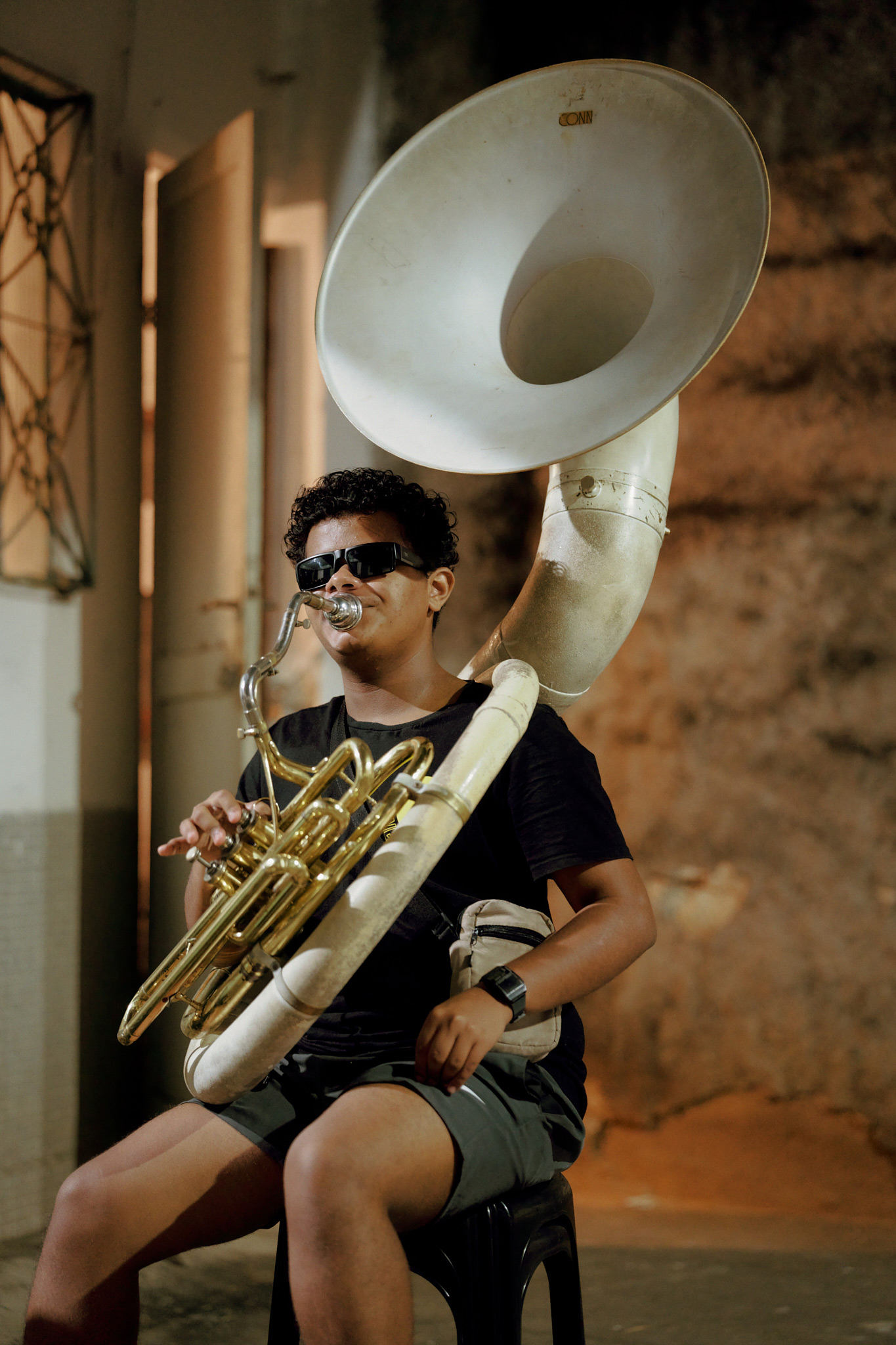 © Ron Timehin | Sony α7R V + FE 50-150mm f/2 GM | 1/100s @ f/2.0, ISO 1600
Rewind 24 hours and Ron is photographing local children playing brass instruments in Favela Pereira da Silva, a small community in the south of the mega city. There, he explains, a scheme has been set up to provide music classes for local kids and students. “It’s called Favela Brass,” Ron explains, “and it was set up by Tom Ashe from the UK. Living in the city, he saw children from poorer families didn't have opportunities to learn music. And as brass instruments are far more expensive in Brazil than in the UK, they’re completely out of reach for many.”
Seeing a documentary about the programme, Ron fell in love with the concept. “It reminded me of how important musicianship was to me as a child. I played the trumpet and spent a lot of time performing with orchestras. The value of learning an instrument is huge. It teaches you that discipline and dedication can pay off, how to collaborate in a band, and how to handle nerves when performing. It also broadens your horizons. Taking photos of my travels was what got me interested in being a photographer.”
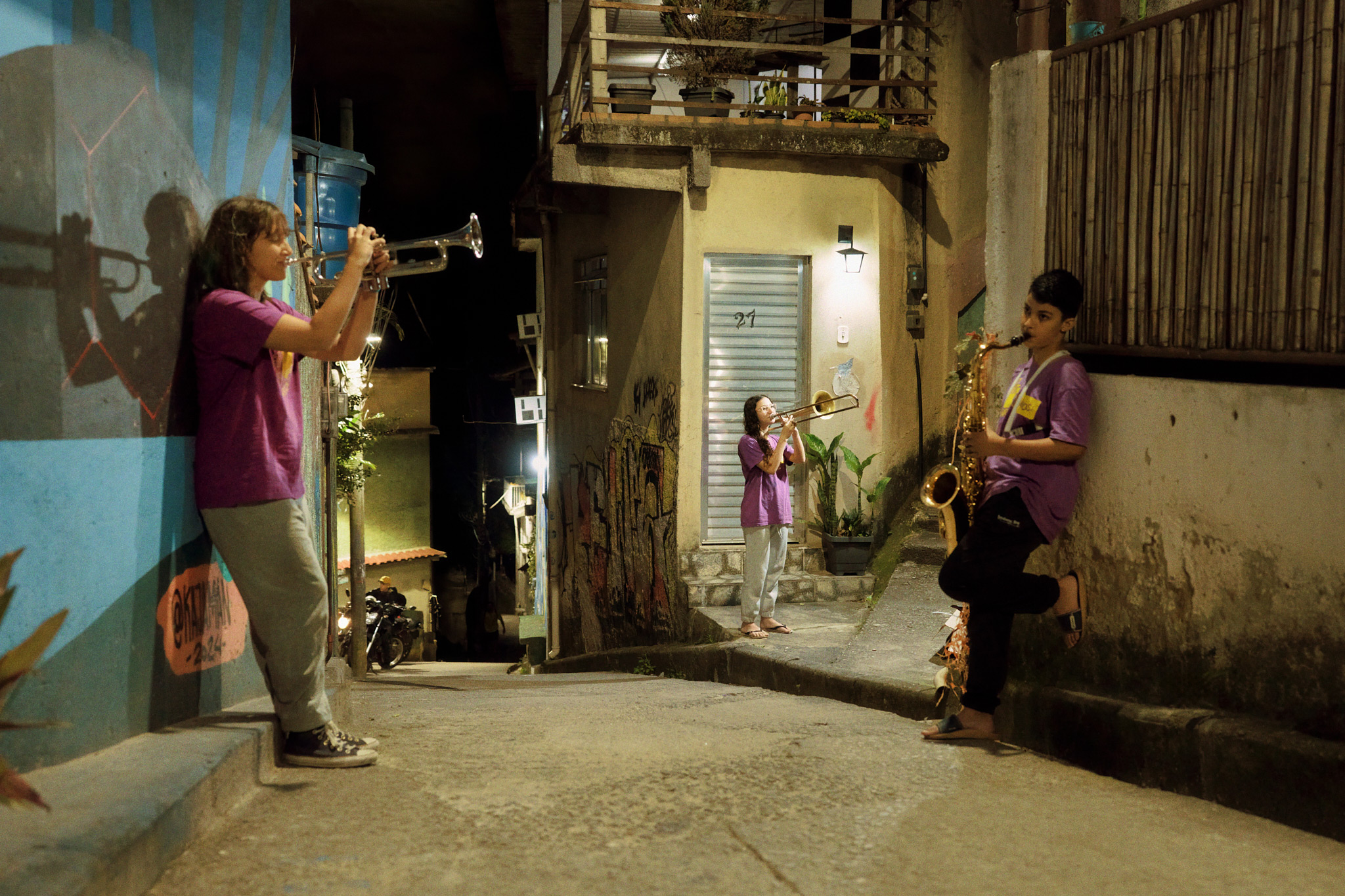 © Ron Timehin | Sony α7R V + FE 28-70mm f/2 GM | 1/125s @ f/2.8, ISO 1600
Starting with four students, Favela Brass’s number has grown to 150, and the various bands play in the world-famous Rio Carnival, performing samba as well as jazz and pop music. Inspired by the story, Ron wanted to photograph the players. “The concept was to make some environmental portraits of the students, but also to document them playing, both of which they could use for their own marketing. We went to the school and met the students and teachers, as well seeing where they practiced and hung out. To help we had a favela guide who knew the area and the locals, his girlfriend, my boyfriend, and a lighting assistant based in Rio which meant we had access to the gear we needed.”
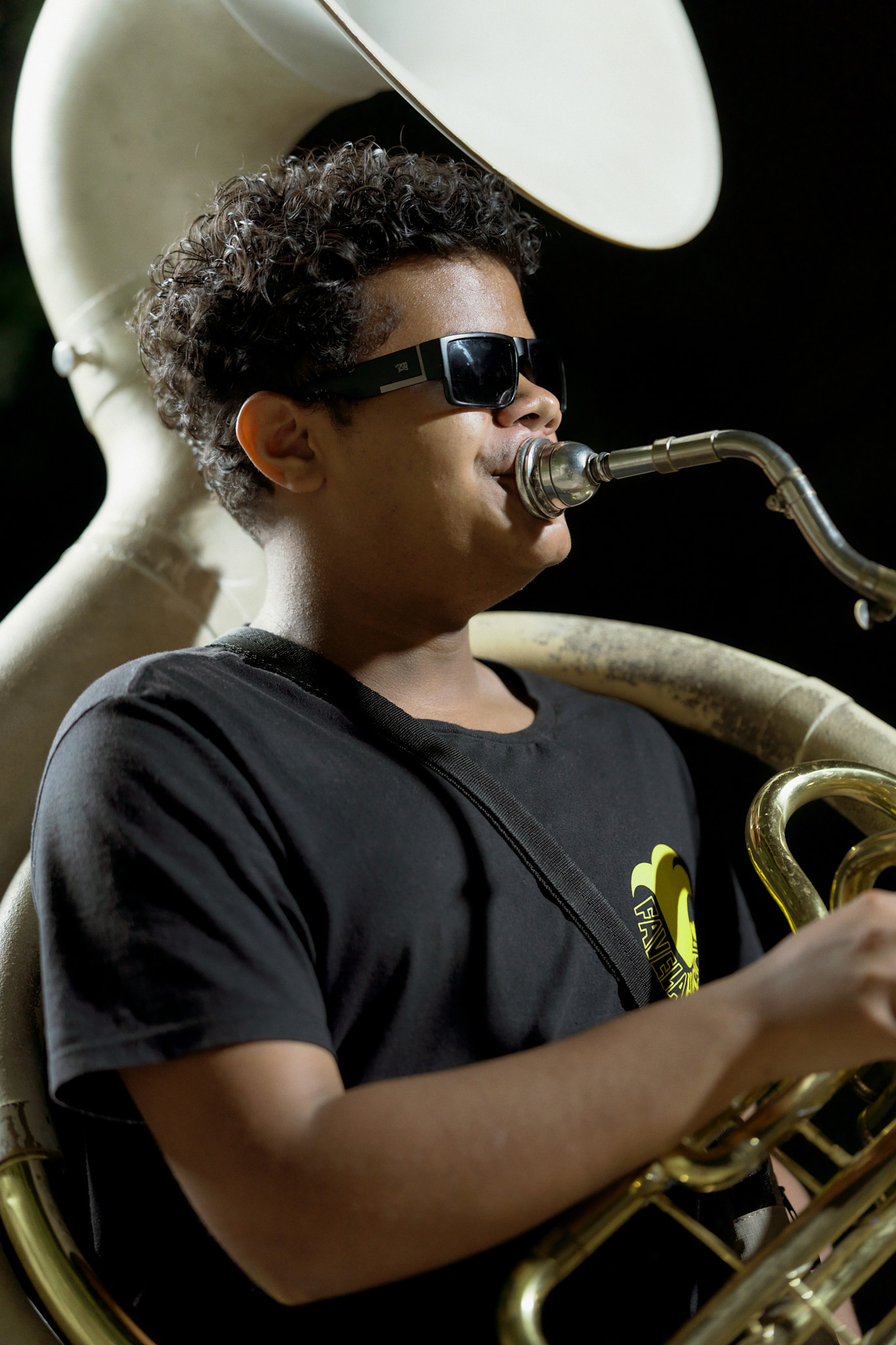 © Ron Timehin | Sony α7R V + FE 50-150mm f/2 GM | 1/100s @ f/2.0, ISO 320
The latter proved important straight away, Ron explains. “I’d planned to shoot in the daytime, but I’d forgotten they’re at school! That meant working after dark, so having access to lights was brilliant. We placed LEDs to augment the available light in the streets, sometimes using them as a key light, or from behind to make a rim light to add separation. For example, the girl playing drums is lit mainly by a streetlamp with LEDs for fill and accents. We used bi-colour lights so we could match them to the bulbs in the scene.”
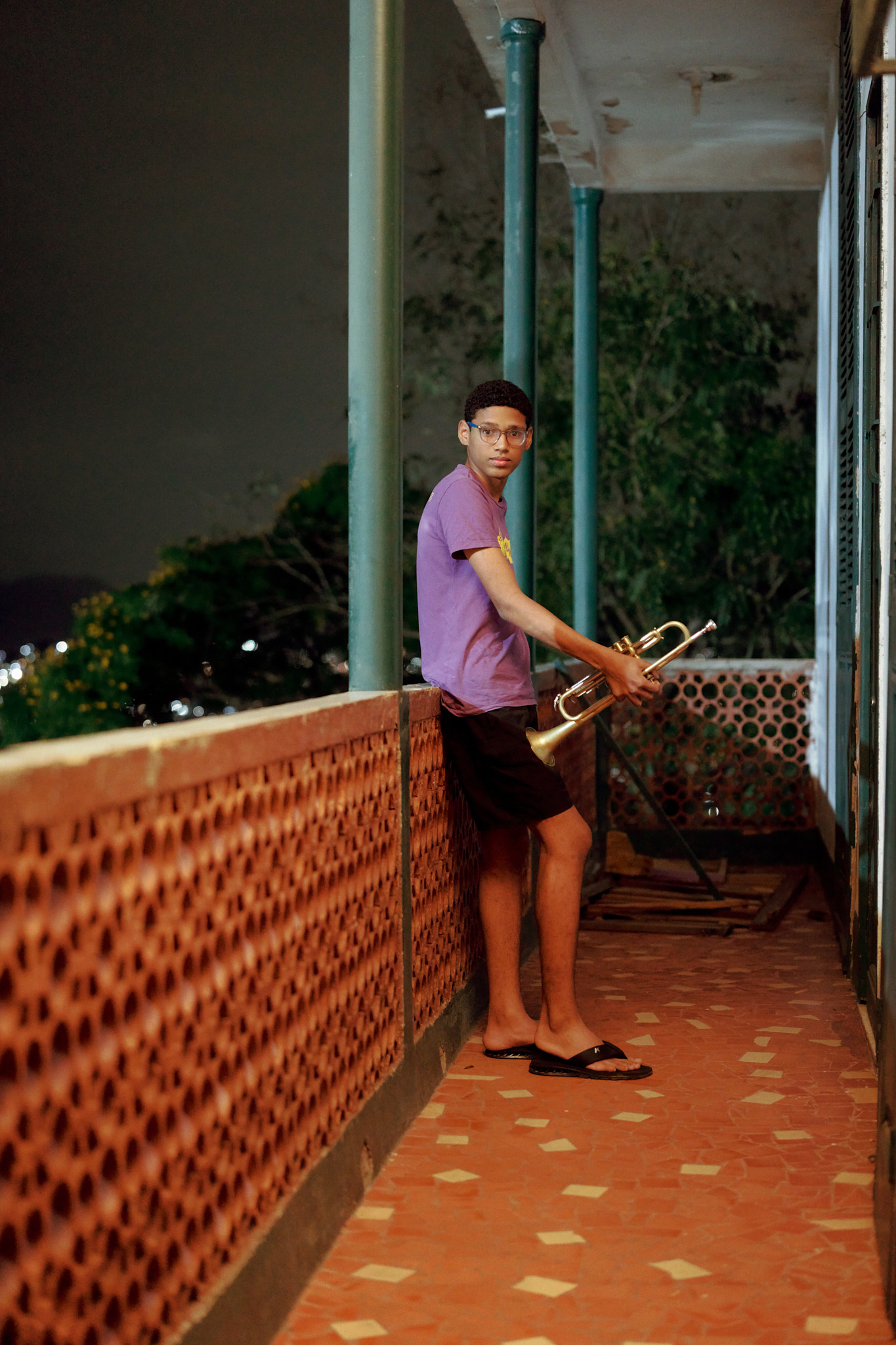 © Ron Timehin | Sony α7R V + FE 50-150mm f/2 GM | 1/100s @ f/2.0, ISO 1600
Despite not being in the original plan, continuous lighting helped Ron work quickly and unobtrusively, too, he says. “Flash can obviously attract attention, and though that favela is one of the safer in Rio, it’s better to work unnoticed on the streets if you can. Using LEDs means lighting is visible through the viewfinder, so you can base exposure on what’s right in front of you and less setting up is needed.”
As vital was Ron's choice of a Sony Alpha 7R V camera along with FE 28-70mm f/2 GM and FE 50-150mm f/2 GM lenses. “LEDs don’t have the power of flash, so you need to shoot with fast lenses and use higher ISOs,” he explains, “but a model like the Alpha 7R V has superb image quality even at settings like ISO 1600. And with f/2 lenses, and you have a whole stop more light compared to f/2.8, so 1/50sec becomes a much more workable 1/100sec. Those lenses are also remarkably small and light considering how fast they are, and together with the Alpha 7R V it all fitted in a small backpack.”
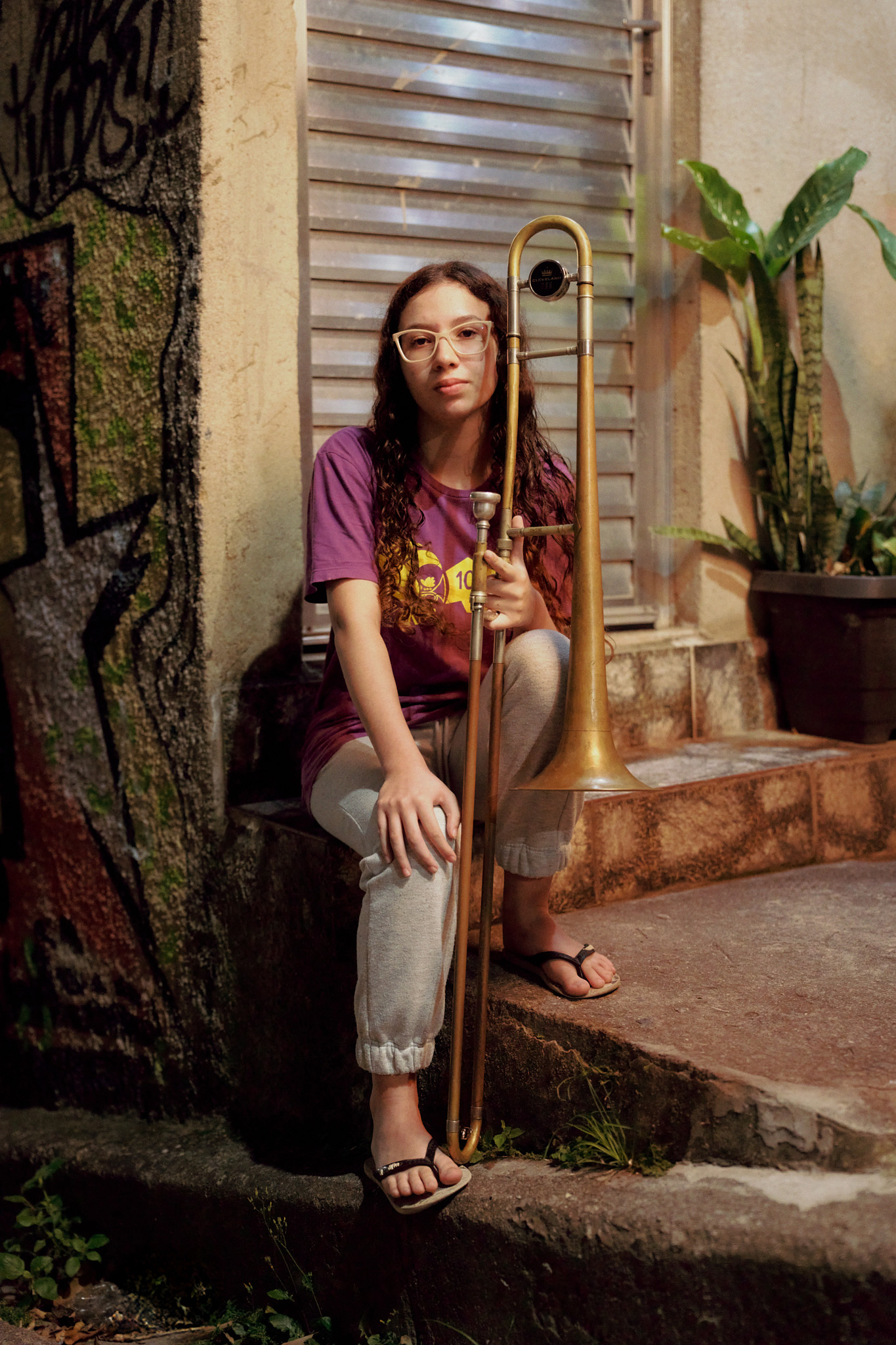 © Ron Timehin | Sony α7R V + FE 28-70mm f/2 GM | 1/200s @ f/2.0, ISO 1600
The emotions Ron felt when working with the band have ed him to take on more projects like this, he says. “I used to go places like Rio and concentrate on the landmarks, but working with people felt so much more personal and connected. I’d love to go back and shoot more of them performing, or document them practicing at home. Tom Ashe was delighted with the pictures, too, and will use them to continue the good work.
“I’m really proud of the project,” he finishes. “To be welcomed into that story and support them was a real privilege. And it proved to me that photography can bring people together in just the same way as music.”
Featured products


Ron Timehin | UK
"Photography provides the ability to process, appreciate and interpret the world around me"


