
Chasing the Northern Lights
Stefan Liebermann
As a landscape photographer with a focus on astrophotography, I prefer lenses with large apertures to capture as much light as possible at night. This often goes hand in hand with large and heavy lenses, which are not very practical when travelling.
So I was very interested when I heard about the new FE 16mm f/1.8 G - an extremely fast wide-angle lens with a weight of just over 300g. To illustrate this, I put my existing astro lenses: the FE 14mm f/1.8 GM and the FE 24mm f/1.4 GM next to it. The already very small and light lenses look huge in comparison and are about 50% heavier. This makes the FE 16mm f/1.8 G the lightest and smallest lens on the current market for astrophotography.

I wanted to really test this lens properly and there's no better way to do this than chasing the magical Northern Lights in winter, so I headed off to Iceland for a short one-week trip. When I landed in Iceland, I was welcomed by stormy weather - typical for the Arctic winter. The first destination, independent of the weather, were waterfalls. There was light sleet at Brúarfoss waterfall, which was no problem for the moisture-protected lens. The ultra-wide angle of 16mm made it easy to capture the waterfall together with its azure blue riverbed. Interesting flow effects can be reached with longer exposure times of between 0.1 and 1 seconds. Ideally, ND filters are used to achieve these exposure times during the day. In comparison to the FE 14mm f/1.8 GM, screw-in filters can be easily attached through the integrated 67mm filter thread on the front of the lens. Because my stay in Iceland was very spontaneous, I didn't have any 67mm filters with me and I had to improvise. With the smallest aperture of f/22 and ISO 50, I was able to achieve the desired exposure time of 1/5s even without a filter. Although diffraction effects can have negative effects on sharpness at f/22, I was really happy with the sharpness of the entire photo, and I was also able to impressively capture the flow. This is exactly how a lens should work, because as a landscape photographer you often have to improvise.
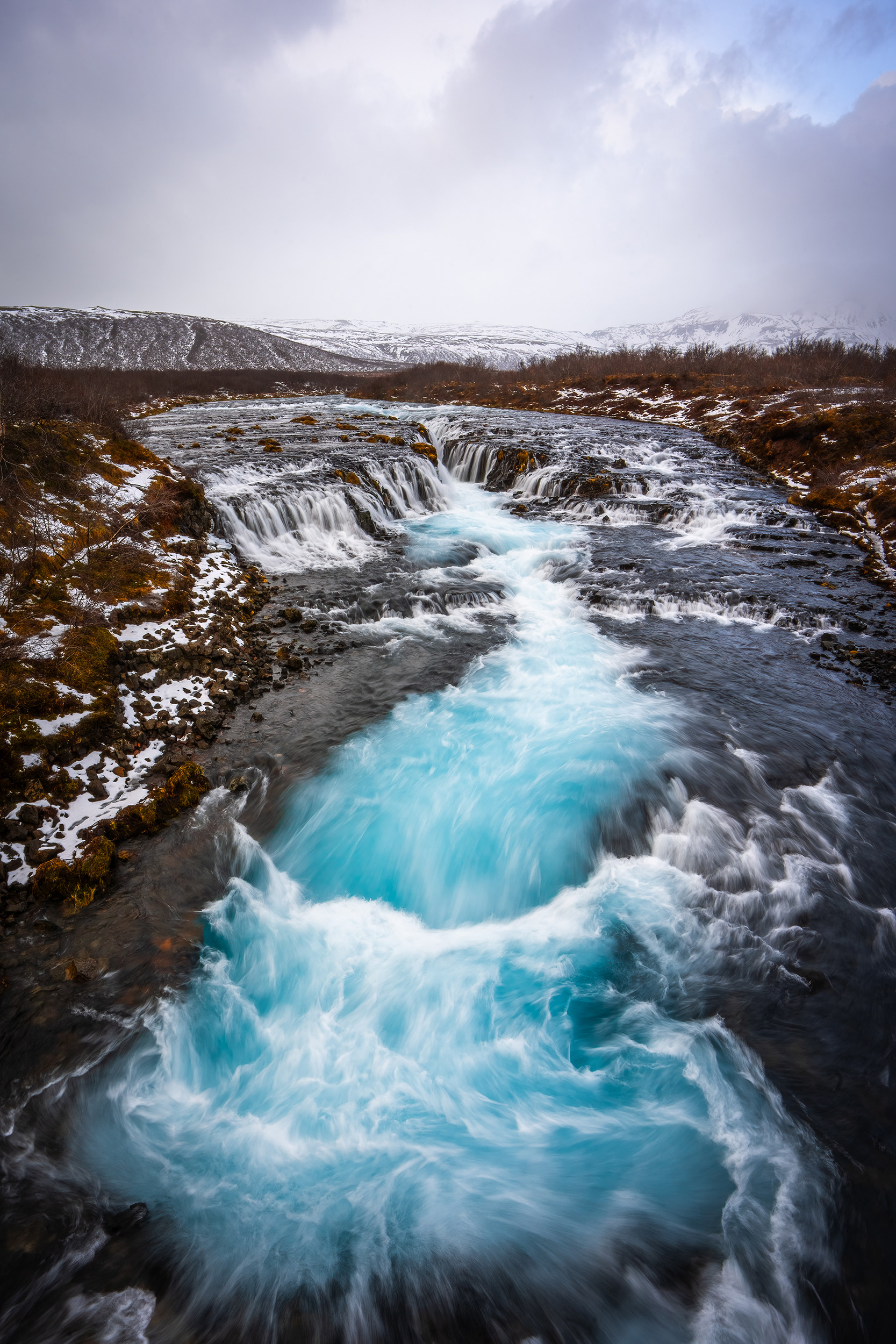 © Stefan Liebermann | Sony α7 IV + FE 16mm f/1.8 G | 1/5s @ f/22, ISO 50
The next stop was the famous Skógafoss waterfall. Any hopes of catching the Northern Lights there were quickly shattered by the current storm. I decided to spend the night near the waterfall so I could photograph the scene in the morning. It snowed during the night and I was able to photograph it with a layer of fresh snow. I was surprised by the minimal geometric distortion, which is not typical for ultra-wide-angle lenses. Due to the close focusing distance of 13cm, I played around with the focus and could hardly detect any focus breathing (change of the field of view when changing the focus). Ideal for focus stacking in landscape photography. I did this here with the Alpha 7R V, which supports automatic focus stacking as an image mode. Ice structures in the foreground and the snow-covered waterfall in the background.
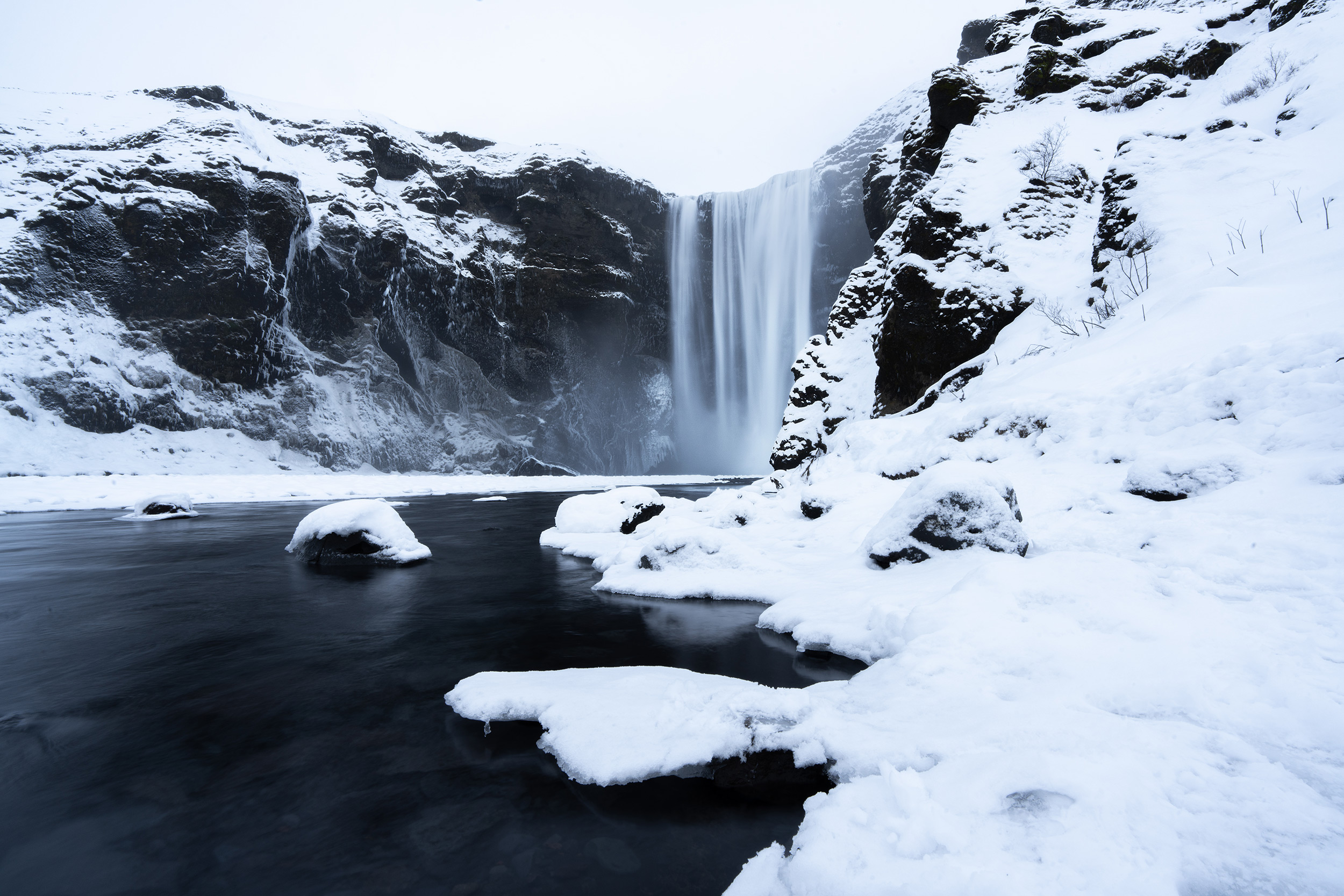 © Stefan Liebermann | Sony α7R V + FE 16mm f/1.8 G | 1s @ f/22, ISO 64
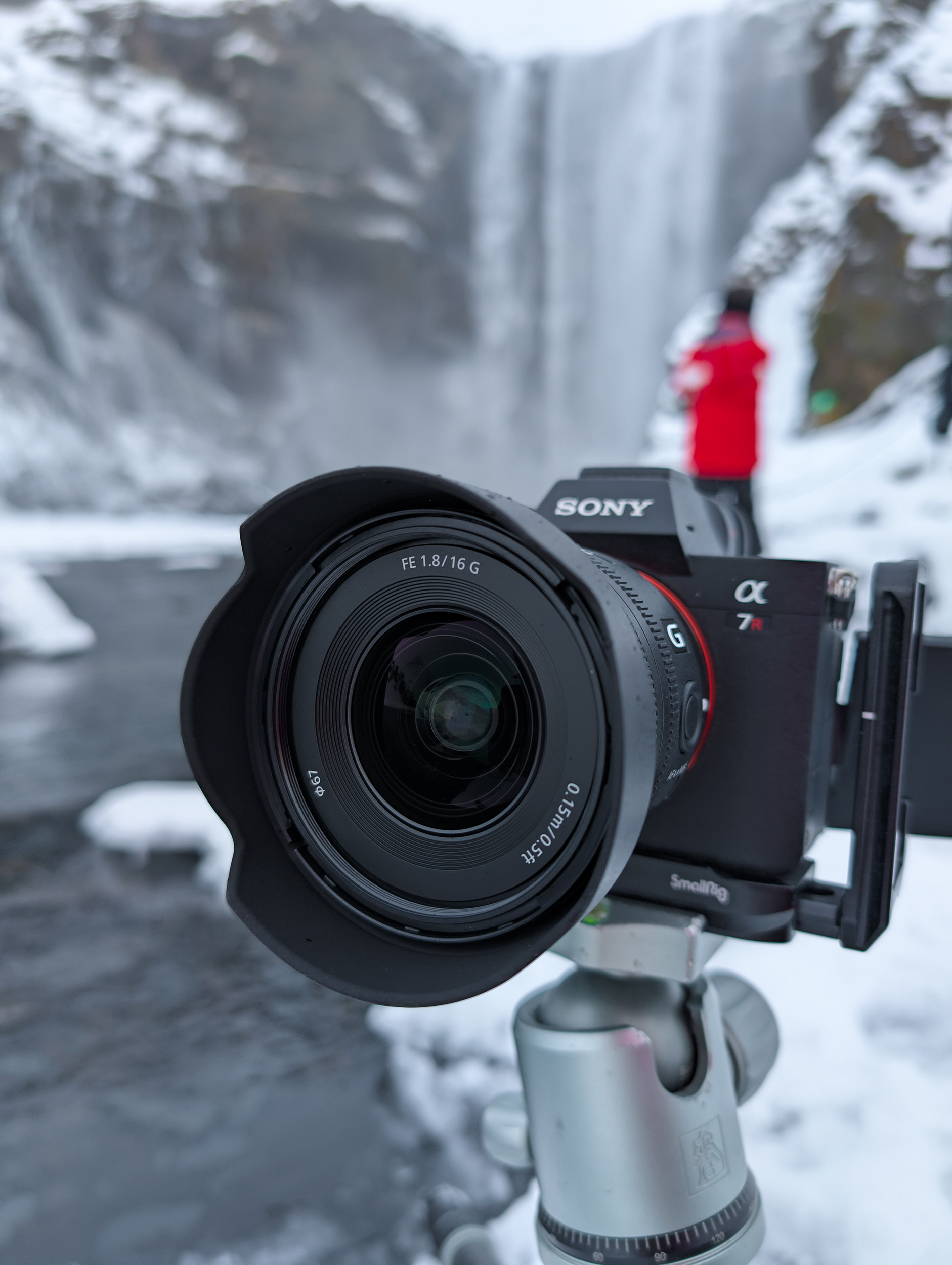 © Stefan Liebermann
The weather forecast for the next night was promising in the south-east of the country. My destination was the Vestrahorn, a striking mountain in South Iceland. I reached the region in the evening and scouted. The conditions were perfect: fresh snow on a beautiful mountain that can be photographed from the north with a beach in front. After sunset, the sky cleared and the wind, which is normally very strong in this region, surprisingly calmed down. After dinner in the camper, the big show in the sky began. The Northern Lights usually only stay for a limited time, so I had to hurry. I grabbed my backpack and headed for the beach. On the way there, I made a short stop in the middle of the snowy landscape. The Northern Lights were everywhere in the sky so I decided to take a panorama. As the Northern Lights move dynamically, the single photos have to be taken very quickly. The shorter the focal length, the less single photos are needed and the larger the aperture, the shorter the exposure time - ideal conditions for the lens. I placed myself in a single photo with a headlamp, which was easy to shoot with the integrated 10s second self-timer on my camera.
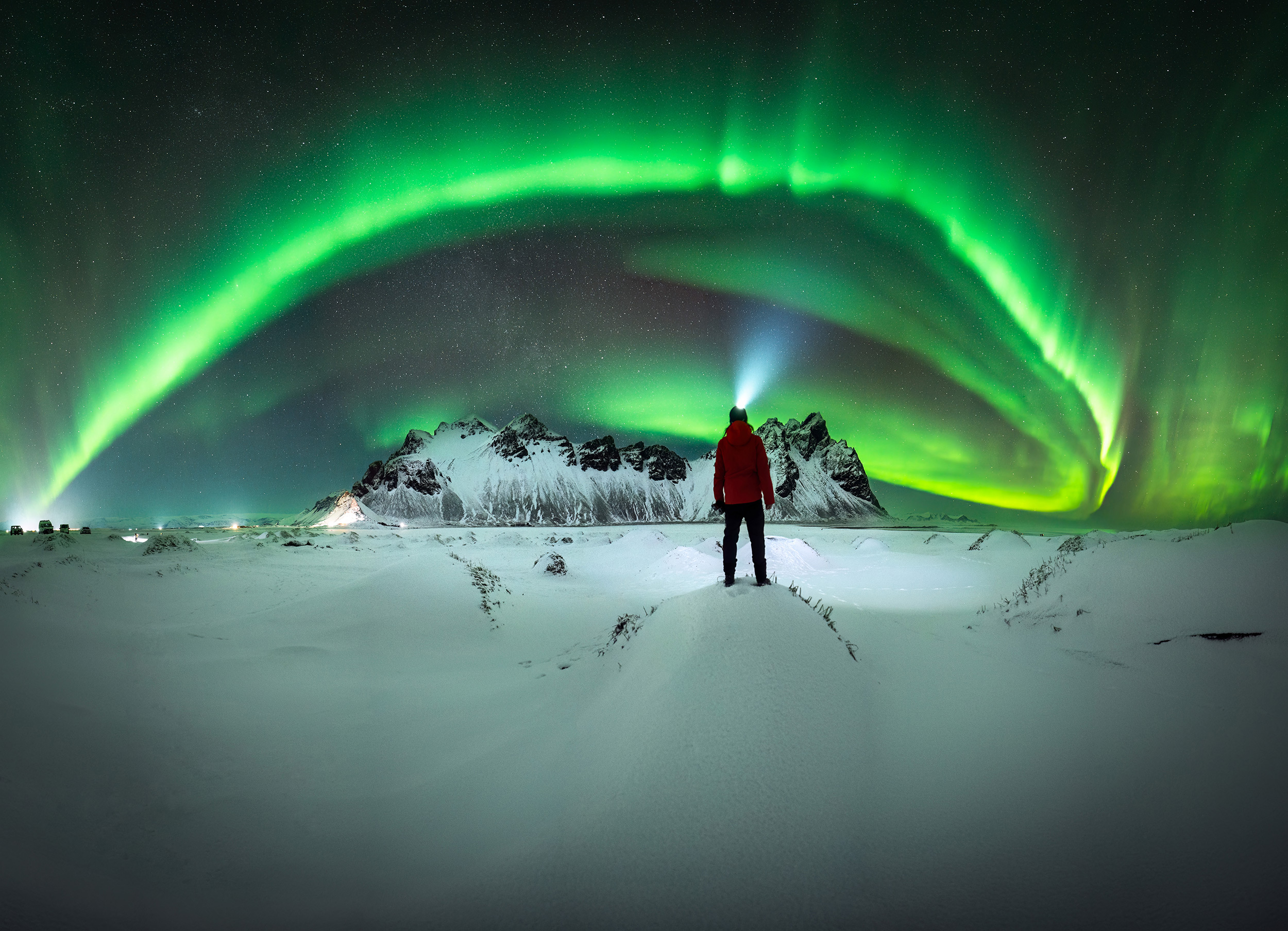 © Stefan Liebermann | Sony α7 IV + FE 16mm f/1.8 G | 5s @ f/1.8, ISO 4000
I had no time to lose, so I continued down to the beach. And this is where the real potential of the lens became visible. I tried to photograph the northern lights over the Vestrahorn reflected on the thin water layer of the returning waves - all in very dark conditions... it sounds difficult, and it is! Short exposure times were now really important so that I didn’t get hit by the next wave. With f/1.8 and ISO 4000, I was able to take a well-exposed photo within 4 seconds. And wow it worked! The Northern Lights reflected together with the Vestrahorn. What a stunning moment.
 © Stefan Liebermann | Sony α7R V + FE 16mm f/1.8 G | 4s @ f/1.8, ISO 4000
Now I tried to take it to the extreme. Taking complete panoramas during a returning wave. What incredible fun to run from wave to wave at minus 10°C to get faster and faster. Wet and frozen feet guaranteed. So, it's even more important that the lens is small and compact, as you have to act quickly when you're running away. No problem with this lens. Thanks to the wide angle of 16mm and the wide-open aperture of f/1.8, I managed to capture panoramas with reflections on the beach. To be honest, I am thrilled with the result. At f/1.8, the sharpness is very good and the coma and vignetting at the corners is very low. But just take a look at the photos for yourself!
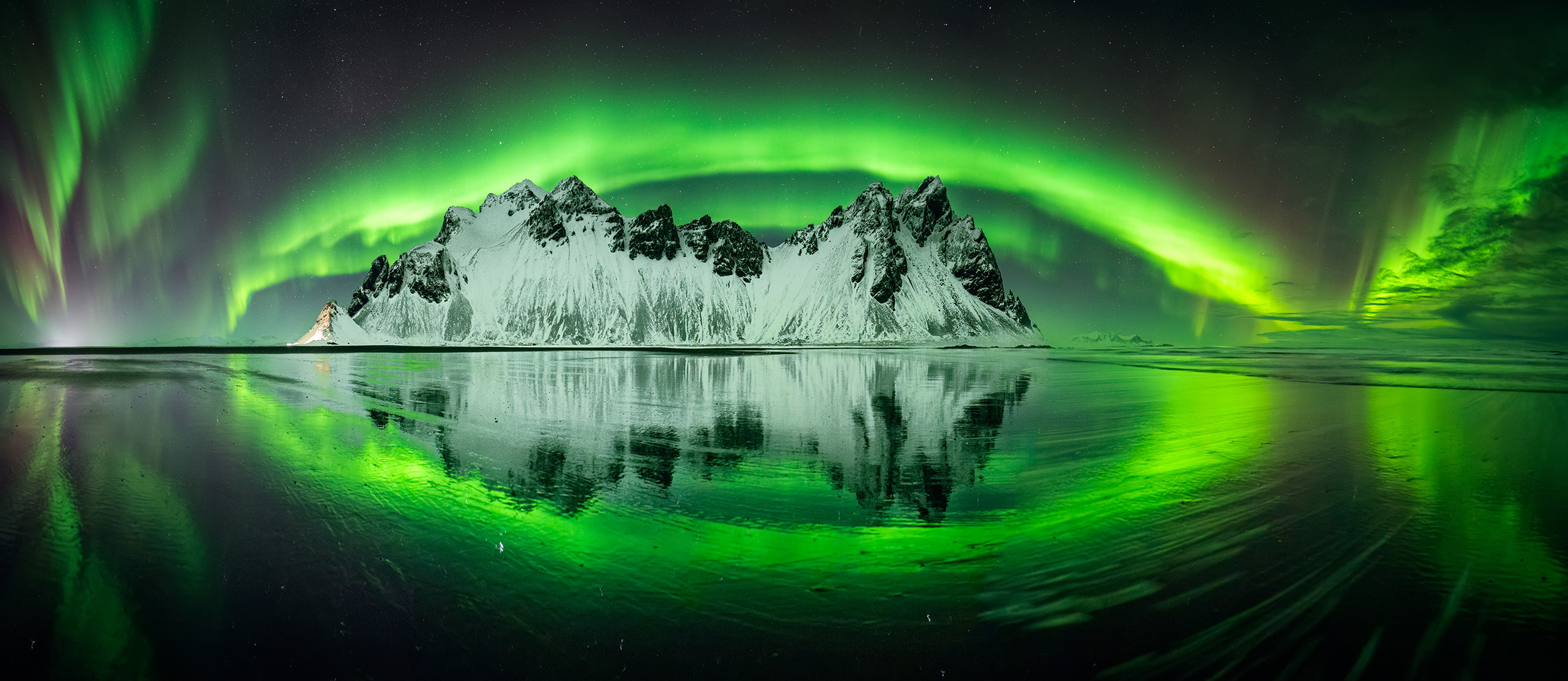 © Stefan Liebermann | Sony α7R V + FE 16mm f/1.8 G | 4s @ f/1.8, ISO 3200
When my fingers had lost feeling and needed a short break, I simply pointed the camera towards the sky and took as many single shots as possible using the interval shooting function. You can create a time-lapse from this in post-processing. The camera was also able to capture a beautiful northern lights sub-storm. The exposure time was set to just 2 seconds to prevent that the fast-moving northern lights getting blurred. Large apertures (F/1.8) are essential for this as otherwise you have to shoot at very high ISO ratings.
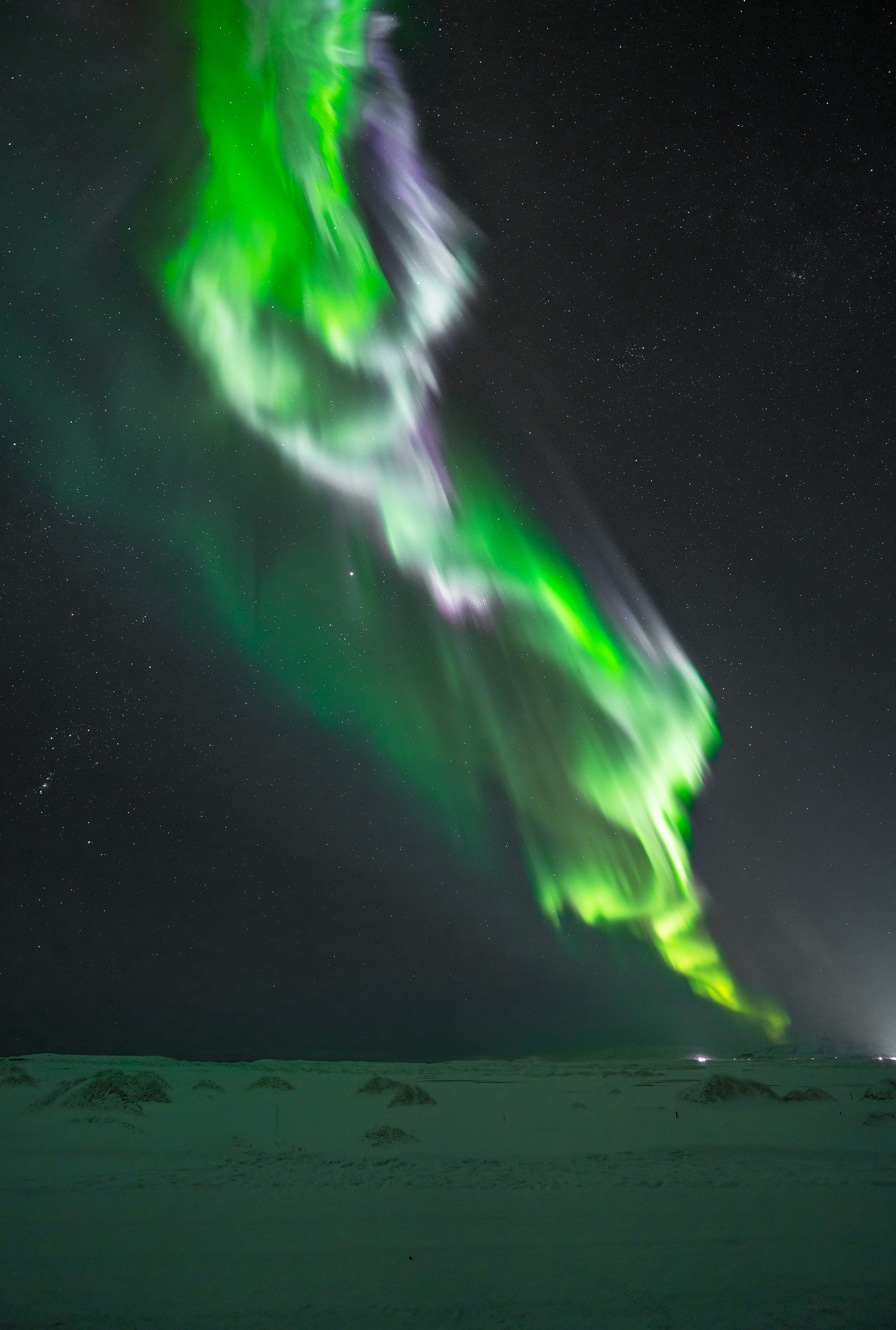 © Stefan Liebermann | Sony α7R V + FE 16mm f/1.8 G | 2s @ f/1.8, ISO 2000
As soon as my fingers were warm again, I continued with the panoramas! After about 2 hours the magic was unfortunately over. At sunrise I photographed the Vestrahorn again with the first light. Again, the lens performed very well now at f/13.
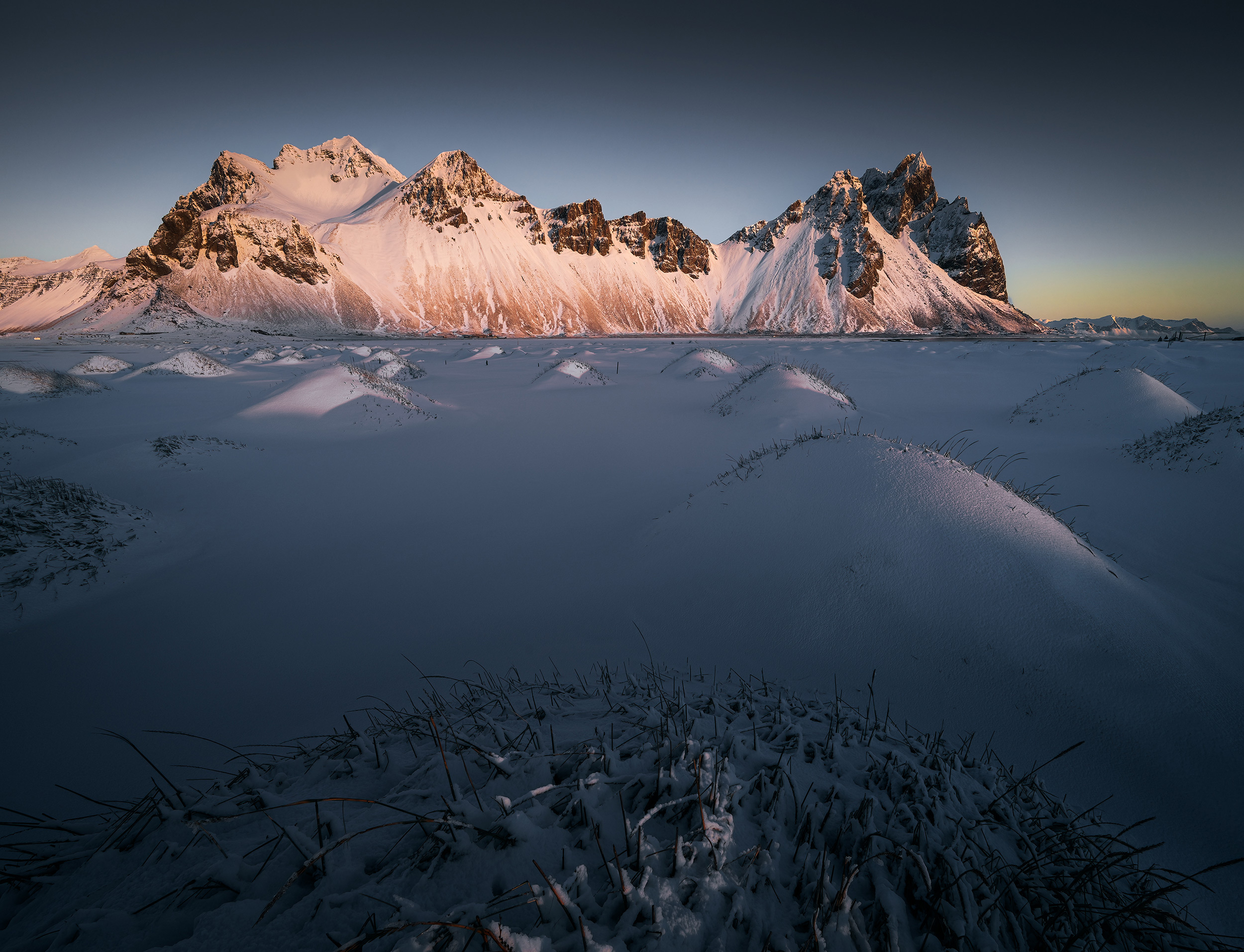 © Stefan Liebermann | Sony α7 IV + FE 16mm f/1.8 G | 1/60s @ f/13, ISO 100
On the way back, I stopped at the world-famous Diamond Beach to photograph 'icebergs' from the Vatnajökull glacier in the beautiful light. It all worked with single shots. Again, I was very impressed with the results.
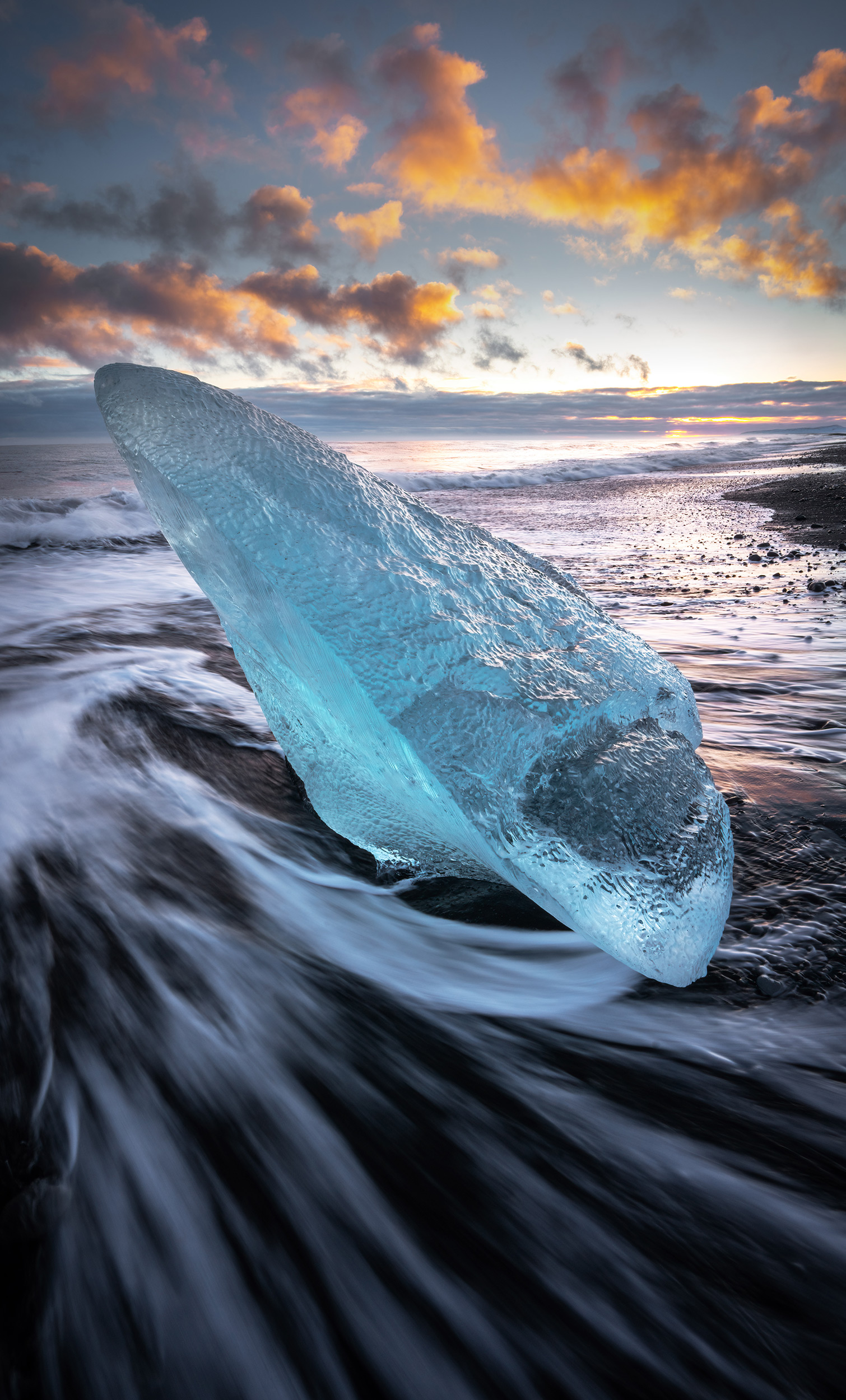 © Stefan Liebermann | Sony α7 IV + FE 16mm f/1.8 G | 1/6s @ f/22, ISO 80
After that, Iceland was hit by violent storms with wind speeds of over 200 km/h and photography was impossible, so I was glad to have had these clear skies. During the last night on the way to the airport, I looked out of the car window and saw the Northern Lights between cloud gaps. I found a good photo spot near Reykjavík and found a house with a pond in front of it. Here, I was also lucky enough to photograph the beautiful reflecting Northern Lights with the lens. As already expected with great imaging performance even at f/1.8.
 © Stefan Liebermann | Sony α7 IV + FE 16mm f/1.8 G | 4s @ f/1.8, ISO 1600
In summary, I thoroughly enjoyed using the FE 16mm f/1.8 G. I think it’s a great lens – ultra light and compact, and the very wide aperture and filter thread make it a superb lens for astrophotography and classic landscapes. It will always have a place in my camera bag.
Featured products


Steffi Liebermann | Germany
"It's a very special kind of photography: Not visible to the human eye, but real"


